
The Aït Bougmez Valley Eco-museum
Located within the Aït Bougmez valley, the Eco-Museum offers a precious window into the culture, history, and daily life of the Amazigh communities. Designed as a space for sharing knowledge, it brings together objects, craftsmanship, and stories that testify to the deep connection between the inhabitants and their land. Here, every piece speaks a way of living, building, and farming, inviting visitors to discover an authentic and living heritage.
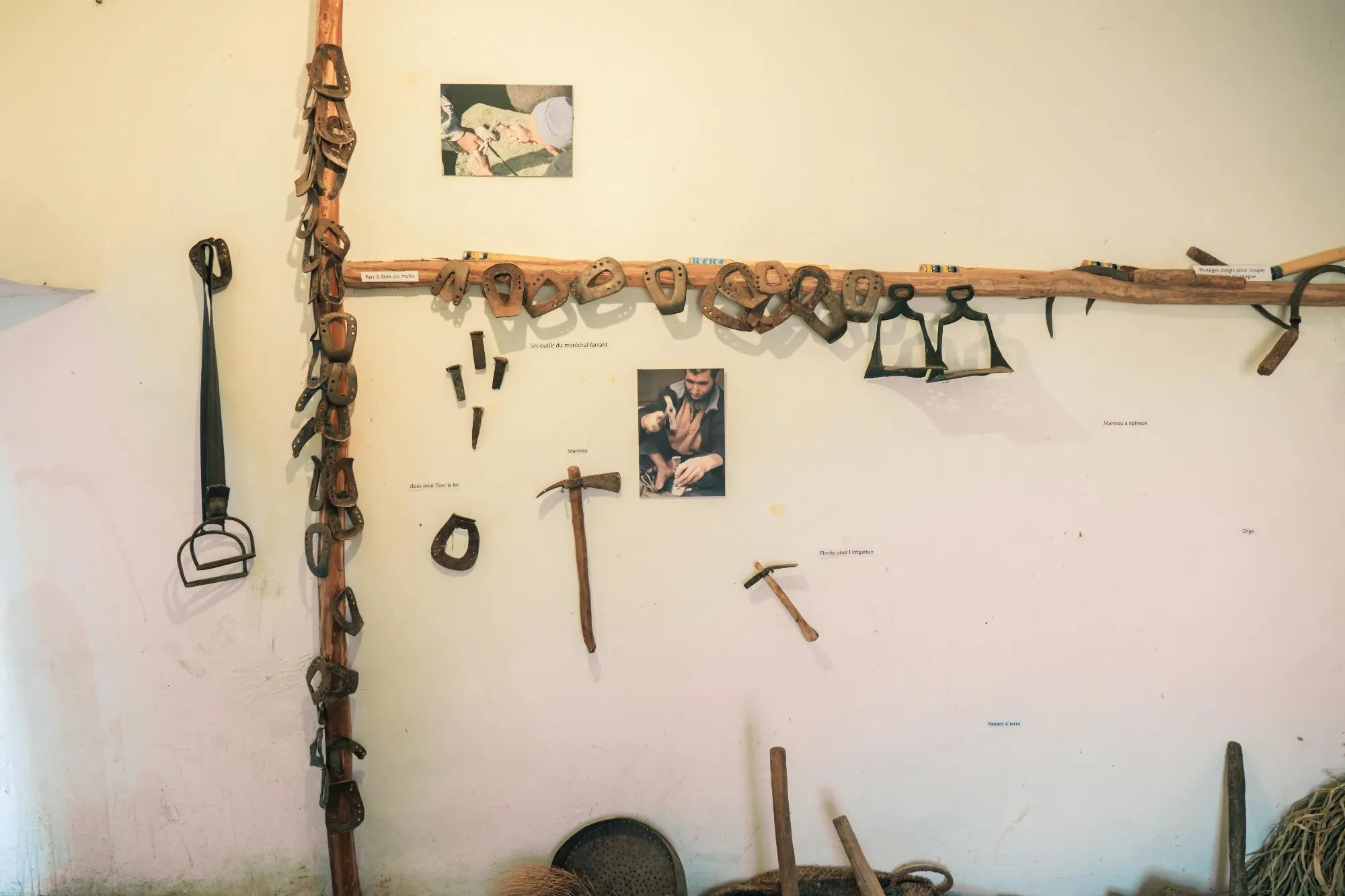
Memory of the Valley
A Land of History and Craftsmanship
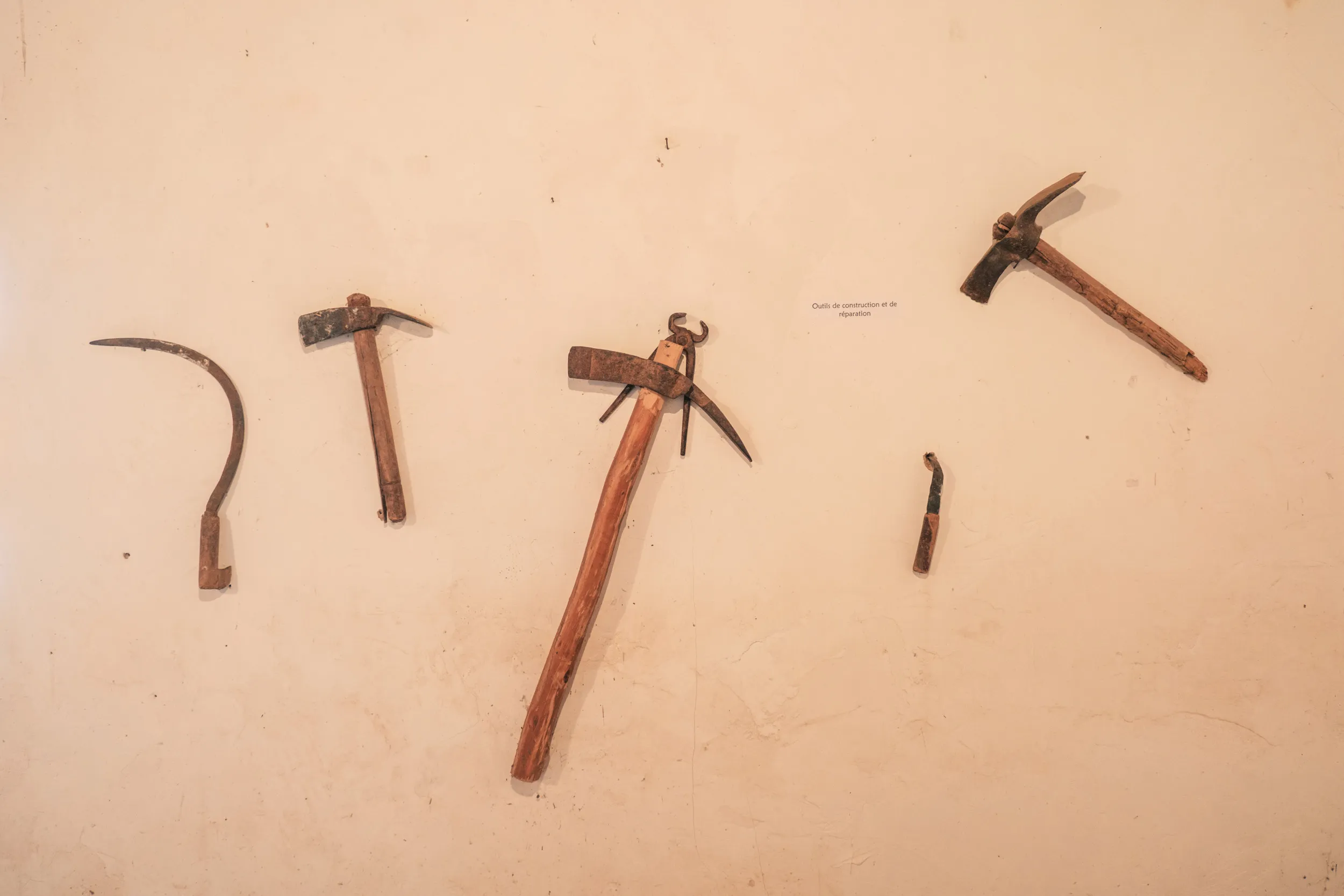
Nestled in the Moroccan High Atlas, the Aït Bougmez Valley also known as the Happy Valley is the cradle of the mountain Amazigh (also known as Berber) tribes. Located about four hours from Marrakech, it stretches for nearly 30 km, between altitudes of 1,800 and 2,200 meters, surrounded by peaks such as the Wawgoulzate and the M’Goun, the second-highest summit in Morocco.
The valley is home to more than 15,000 inhabitants spread across twenty villages. In the heart of this mosaic of life, the village of Zawyat Oulmzi, perched at 2,100 meters, embodies the soul of the valley: hospitality, simplicity, and a deep bond with the earth.
A Place of Immersion and Cultural Exchange
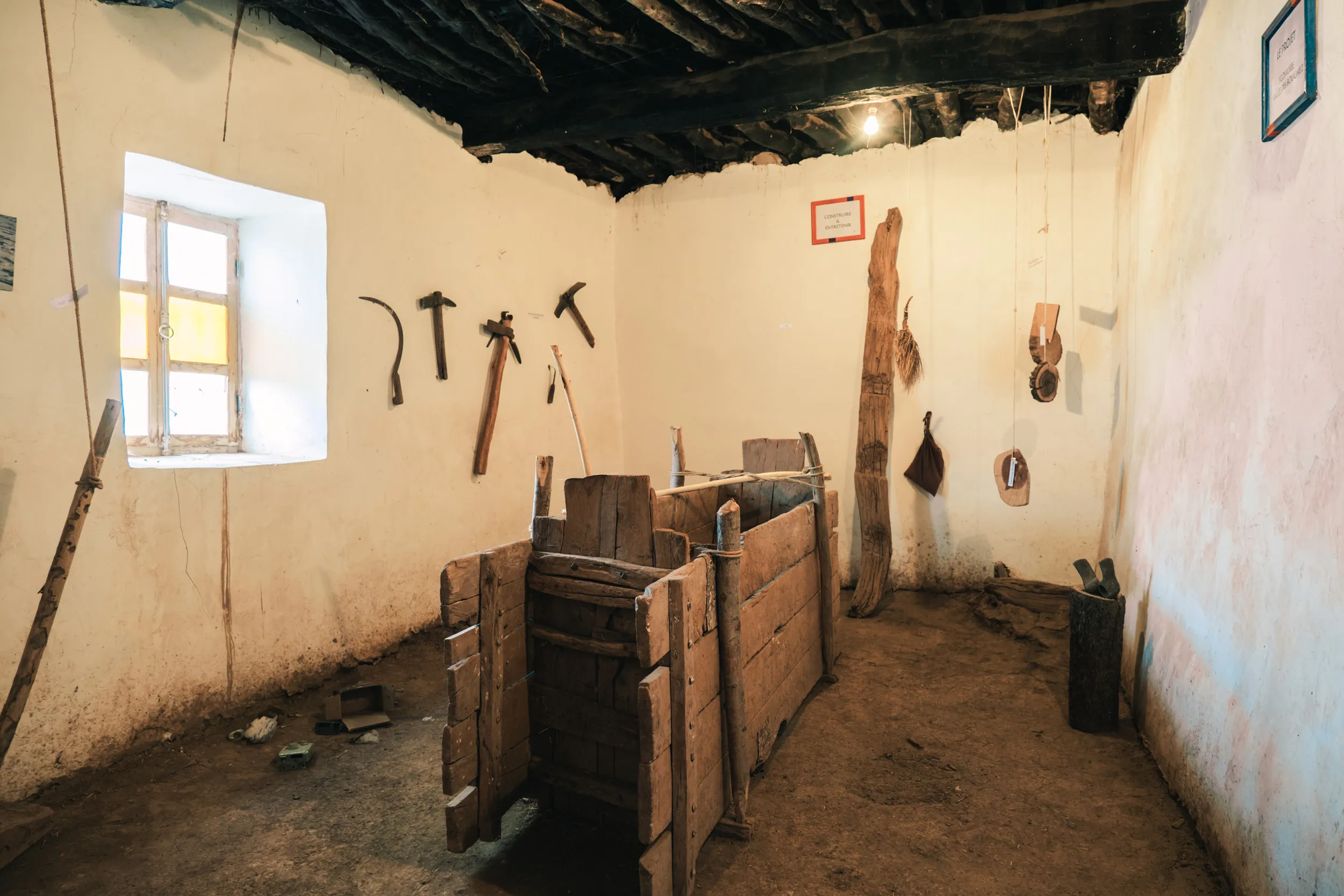
Housed in a traditional farmhouse over two centuries old, the eco-museum plunges the visitor into daily Amazigh life. Women weave traditional handmade rugs, the village guide shares his knowledge over mint tea, while the voices of neighbours resonate from around the museum’s earthen walls.
A true meeting point between past and present, the eco-museum of the Aït Bougemez Valley offers a sincere immersion in Amazigh culture. An experience of listening, exchanging, and discovery that is simple, human, and deeply rooted in the valley.
From Idea to Opening
The Aït Bougmez Valley Eco-museum began as a somewhat wild dream. Born in the village of Zawyat Oulmzi the last and undoubtedly the most authentic village in the valley it stemmed from the desire to create a meeting place between the locals here and visitors from elsewhere. The goal has always been clear: to promote ancestral skills and Amazigh culture, and to spark a shared pride in this common identity in order to transmit it and gain recognition for it.
But in these lands, adventure is a collective experience. It could not have seen the light of day without a passionate and close-knit team: Saïd, Pauline, Ahmed, Claire, Brahim, as well as the inhabitants of Zawyat Oulmzi, they were all actors in the same dream.
The creation of the eco-museum took place in three stages:
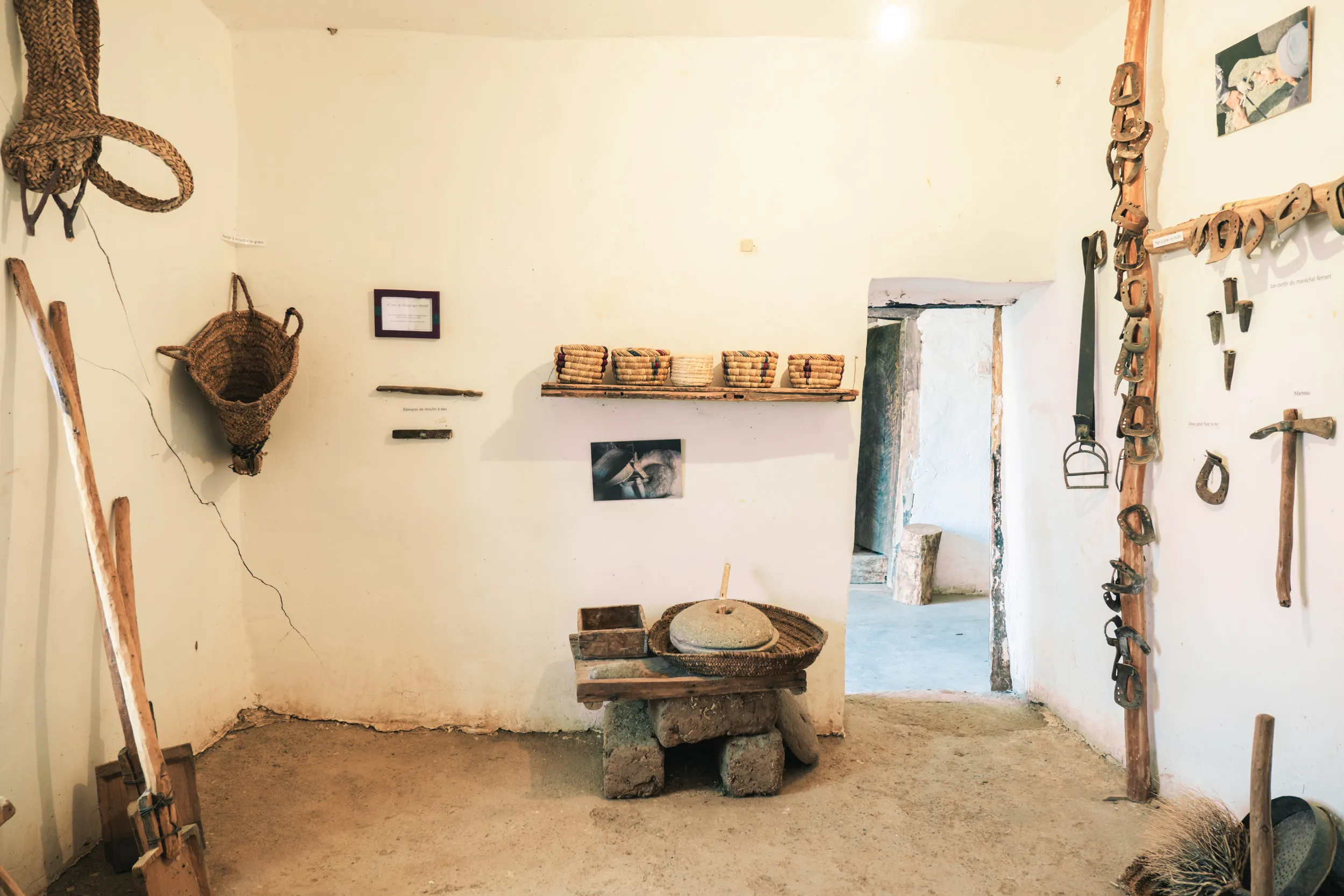
- April to July 2015 — Renovation of the house, collection of objects, and museographic development: selection of themes, display materials, and educational tools.
- August 2015 — Layout and scenography: setting up exhibition spaces and selecting content, designed to evolve over time.
- September 2015 — Inauguration and official opening of the Aït Bougmez Valley Eco museum to visitors.

