%20(2).webp)
In Morocco's rural markets, the scene has become so commonplace that it no longer shocks anyone. Amidst vegetable stalls, sacks of barley, and street vendors, men roam the aisles with a collection basket.
Their message is simple, effective, almost unstoppable: “Give for the construction of a mosque, and God will repay you.”
And the donations pour in.
A few dirhams slipped in by an elderly woman, a note offered by an indebted farmer. A contribution from families who struggle to pay for their children's school supplies…
Popular generosity in Morocco remains immense. But a question has now become impossible to avoid: why is this generosity directed almost exclusively towards religious causes, while the most urgent needs of our communities remain ignored?
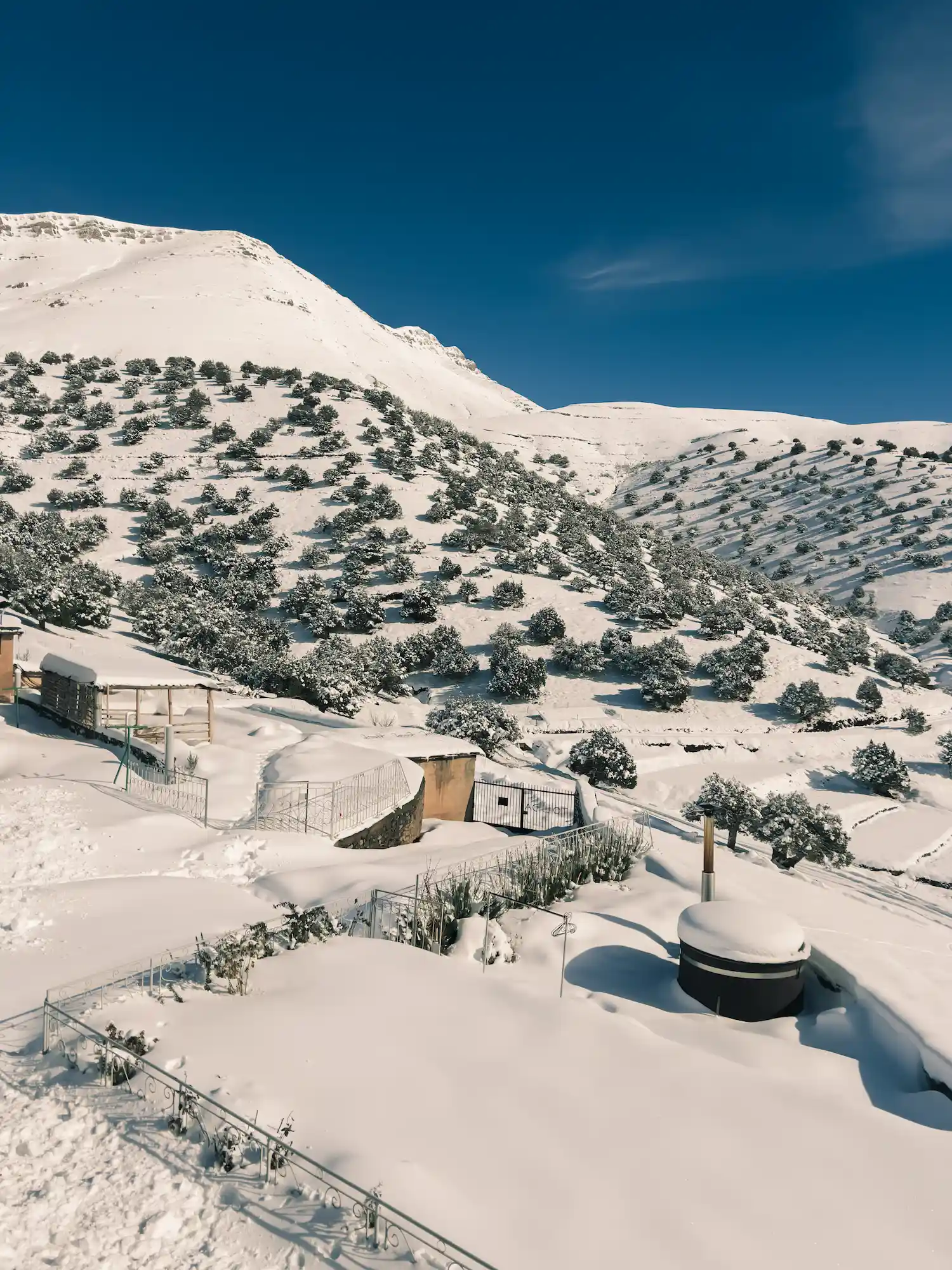
In the Atlas Mountains, the contrast has become stark.
One finds brand-new mosques there, vast, tiled, sometimes luxurious by local standards. They have running water, modern facilities, hot water, and immaculate carpets. Some almost resemble monuments in villages where everything else reflects underdevelopment.
And yet, they are often empty.
A few rows of elderly worshippers occupy spaces designed to accommodate hundreds of people. The youth, meanwhile, have long since left the village or simply dream of leaving it.
Just a few meters from these mosques, another reality emerges, much less visible in official discourse: dilapidated schools, impassable roads, villages without sanitation, without waste management.
In some schools in our mountains, broken windows let in the glacial cold of winter. Sanitation facilities are non-existent or unsanitary. Children walk several kilometers every day to reach often underequipped schools.
Meanwhile, no one goes through the souks to ask for donations to repair a school.
No one promises divine reward to fund a boarding school for girls.
No one travels through villages to collect money to create a library, a waste sorting system, or an ambulance.
Why?
Why have we succeeded in transforming mosque construction into a national collective cause, while education, health, or access to water are still seen as secondary issues, solely the responsibility of the state?
This question is unsettling because it touches upon a deeply ingrained belief: that the religious is automatically nobler, more meritorious, and more urgent than the social.
Yet, what meaning can a huge mosque still hold in a village where children drop out of school? What good is a brand new minaret in a community where pregnant women have to travel dozens of kilometers to give birth? What's the value of a beautiful ablution room when the residents themselves lack hot water for their daily needs?
The problem is not religion.
The problem is our priorities.
For religion, in its deepest essence, does not separate faith from human dignity. It values knowledge, social justice, solidarity, and the protection of the most vulnerable. Reducing piety to the accumulation of religious buildings while accepting the daily humiliation of entire populations is a major moral contradiction.
Morocco currently has several thousand mosques, a very large proportion of which are in rural areas. In some remote villages, there are now more mosques than truly functional educational or cultural spaces.
This reality should prompt collective reflection.
For true development is measured neither by the number of minarets nor by the power of loudspeakers. It is measured by the quality of life of residents, the level of children's education, access to healthcare, roads, water, and dignity.
In the mountains, families don't just expect places to pray. They expect reasons to continue living in their remote territories. They expect schools that can offer a future to their children. They expect decent public services. They expect investment in life itself, not just in symbols.
Perhaps it's time to rethink our concept of solidarity.
To imagine a Morocco where fundraising for a social project would be as natural as for a mosque.
A Morocco where funding school transport, planting trees, preserving a water source, or equipping a clinic would be considered an act as noble as building a place of worship. And this, without waiting for a foreign association to take responsibility for it.
The day this happens, our generosity will cease to be merely emotional or symbolic.
It will finally become a true lever for our own development.
And perhaps, on that day, faith will rediscover its most human meaning.