Hiking the Aït Bouguemez Valley: a guide to Morocco's Happy Valley
Diving into the Ait Bougmez Valley in spring is like signing for a trip back in time. Here, at the foot of Azourki and at an altitude of 2200 meters, Morocco is renewed every year to the rhythm of the flowering of the apple trees and the melting of the snow.
Getting there is, if not quite an adventure, at least an acknowledgment that the destination must be earned: about four hours of driving separate a modern, bustling Morocco from a remote, silent one. Crossing the Tizi n'Tirghist pass at 2,629 meters means closing the door on modernity for a while and opening your senses to authenticity.
Welcome to Amazigh lands!
Why go hiking in the Aït Bouguemez valley?
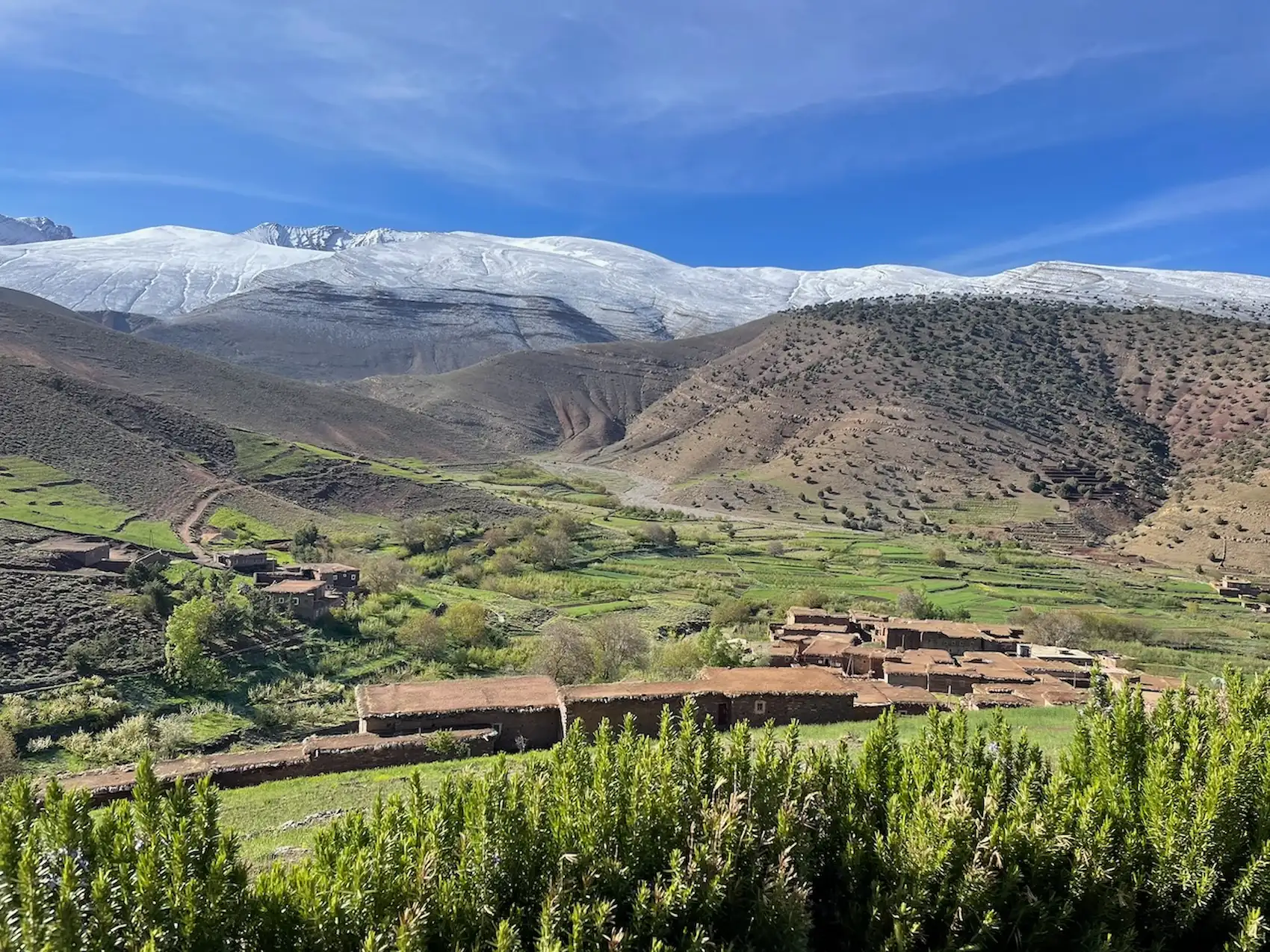
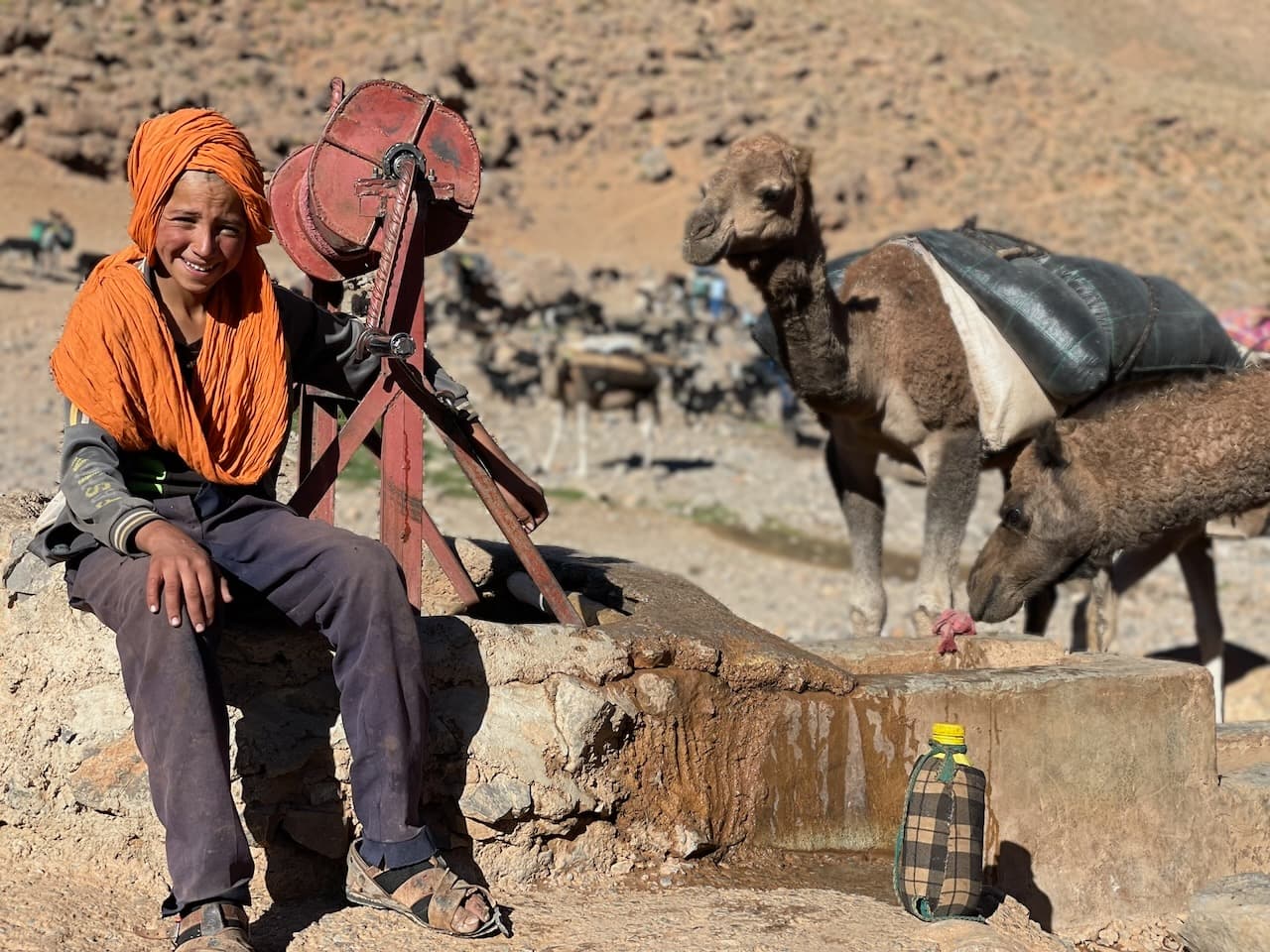
It is nicknamed the Happy Valley, and that is no mere brochure slogan. From the terrace at Touda, which overlooks the village of Zawyat Oulmzi, you only need to look out over the lush green plain to feel a sense of collective serenity. The valley is buzzing with quiet activity: it is time for carrots to sprout, for fields to be plowed by mules, and for potatoes to be planted. A few steps away, men are working together to build a house wall. There are five, ten, or more if needed. The work is singular, the effort collective.
One anecdote says everything about this place: the only air pump for the entire village is kept at Touda, and every morning, a player comes to inflate the ball so the soccer match can begin. Why only one pump? And then again, why not? It is in the Aït Bouguemez valley , far from the mass tourism of Toubkal, that you still encounter more shepherds than hikers. You walk through a living, cultivated, inhabited landscape. Not a backdrop.
The best day hikes
Among the men of the valley are Saïd and Ahmed, our companions on the trails. Farmers, guides, and jacks-of-all-trades, they always have a song on their lips and a knack for solving any problem. It is through their eyes and in their footsteps that the region's beautiful hikes unfold.
Lake Izourar and the nomadic steppe
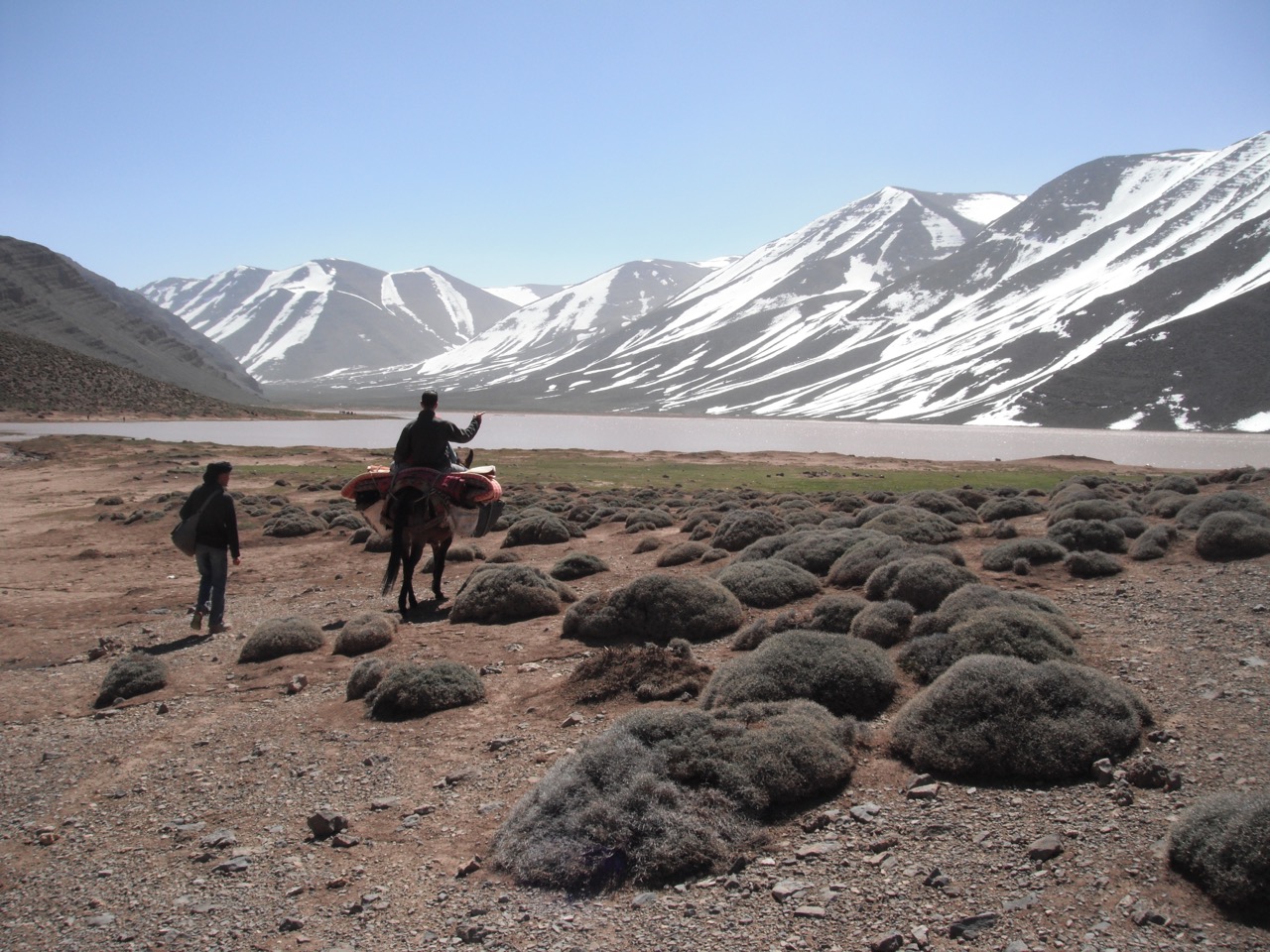
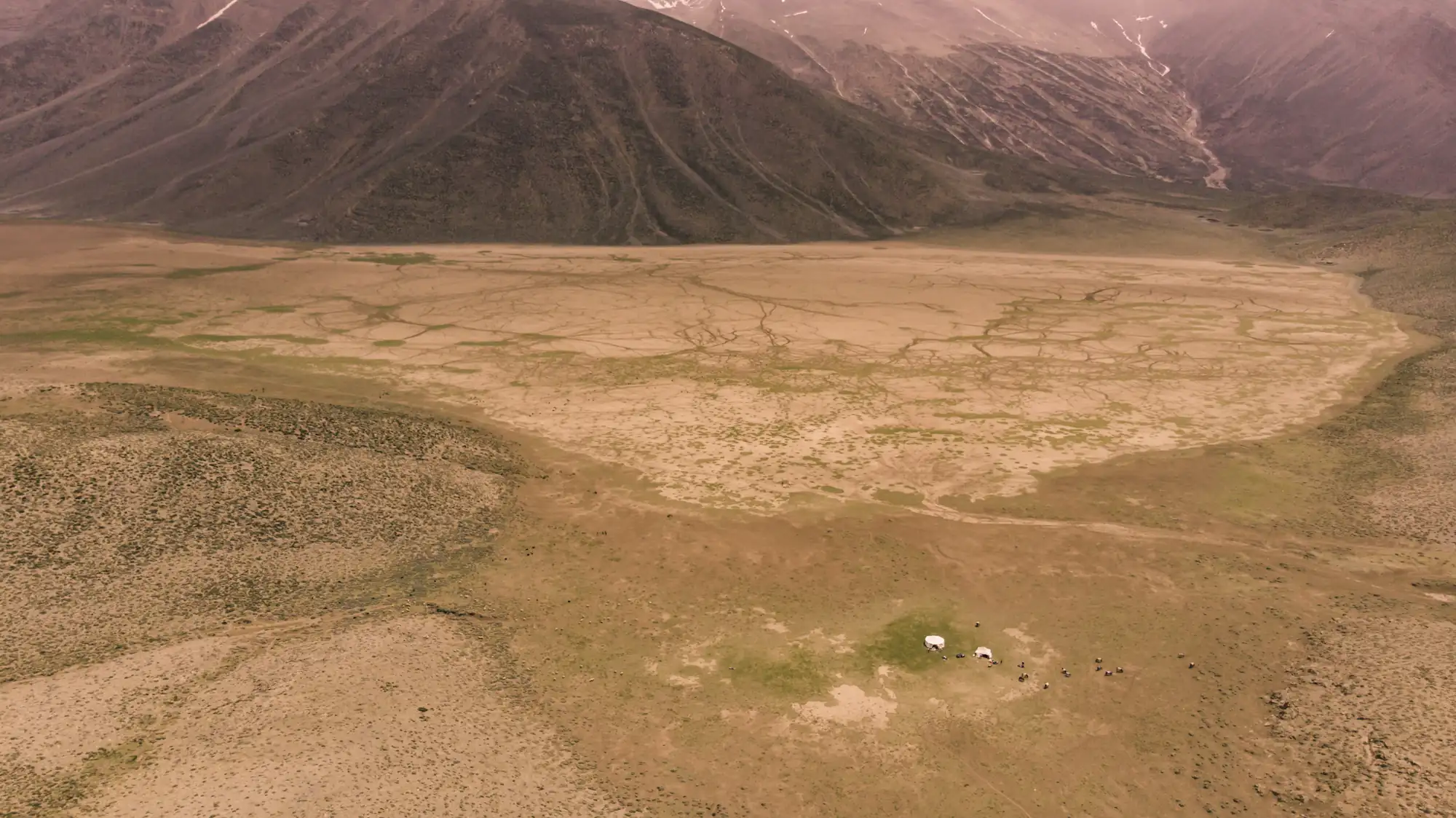
First, after easily covering the roughly 350-meter elevation gain of the walk, you discover a vast steppe that is home to an earth-colored lake: Izourar. The spectacular, almost lunar landscape welcomes nomads and their herds during the May transhumance. Following the edge of the lake allows you to soak in the atmosphere, the isolation, and the silence. Allow a full day from the ecolodge; it is accessible to any regular walker.
From village to village to Tabant
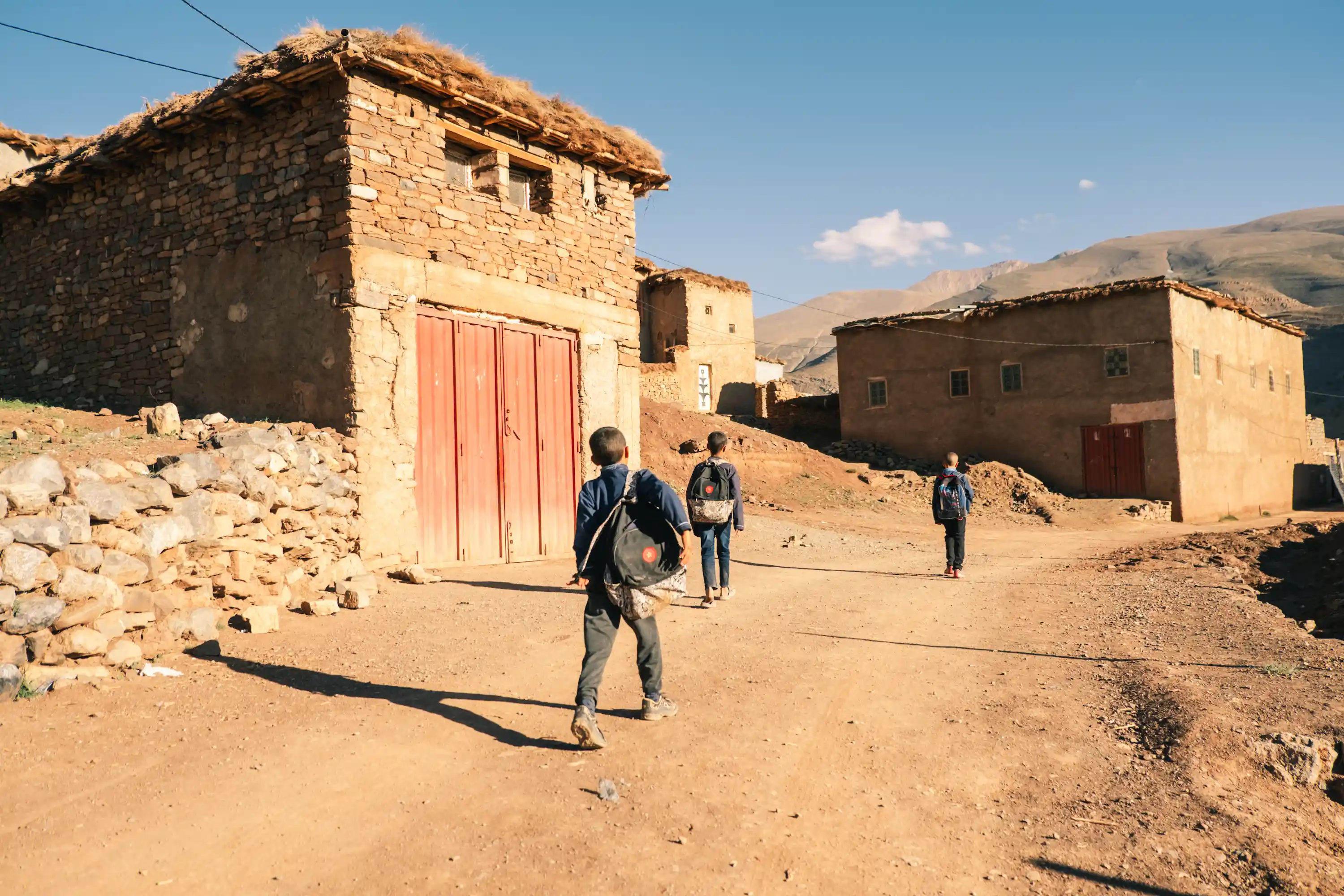
The next day, the tone changes as we descend into the valley. The route to Tabant is dotted with cultivated fields, countless villages teeming with children, irrigation canals, and the splashes of daily life. Passing through Igelouane, Ifrane, Rbat, and many others, you walk the same paths as the man heading to his field or the child running to school. A "salam alikoum" is exchanged without pausing the task at hand, and life goes on.
Following Brahim at a slow pace, we settle into a peaceful walk, attentive to our surroundings. The mules accompanying us, which are very practical for carrying children, don't encourage us to speed up. Sometimes, in the shade of an oak or juniper tree, Brahim offers dried fruit, and we take the opportunity to trade the names of the peaks and talk about lifestyles and traditions.
Ibaklliwn and the dinosaur tracks
The children bob along on the mule, sometimes dozing off, only to suddenly regain their energy upon arriving at Ibaklliwn. Here, it is a rendezvous with prehistory to observe dinosaur tracks. Discreet and not heavily promoted, the site is only discovered by asking a local. An easy half-day trip, perfect for children.
Trekking in the High Atlas: major departures from the valley
The Aït Bouguemez are the northern gateway to the M'Goun massif, the highest peak in the central High Atlas. Unlike Toubkal, it can be reached without technical difficulty, but it requires endurance and proper acclimatization: three to five days of walking, nights in bivouacs or shepherd huts, and a summit that dominates the entire Atlas range. The day-by-day itinerary, the best time to go, and preparation details are on our page dedicated to climbing M'Goun.
Whether you're heading toward the Valley of Roses, the M'Goun gorges for a water trek, or the transhumance pastures, four- to eight-day itinerant treks also depart from the valley, complete with muleteers and homestays. Discover our hikes and activities including difficulty levels, durations, and prices.
What is the best season for hiking in Aït Bouguemez?
From April to June, the valley is at its most beautiful: apple trees in bloom, green fields, and full waterfalls. May is also when the transhumance herds head toward Izourar. The M'Goun retains snow until May, so the ascent is best saved for June.
In July and August, it is hot on the Moroccan plains but very pleasant at 2,200 meters. This is the season for summer pastures on the plateaus.
In September and October, you'll find golden light, apple harvests, and dry trails. It is the perfect time for long treks.
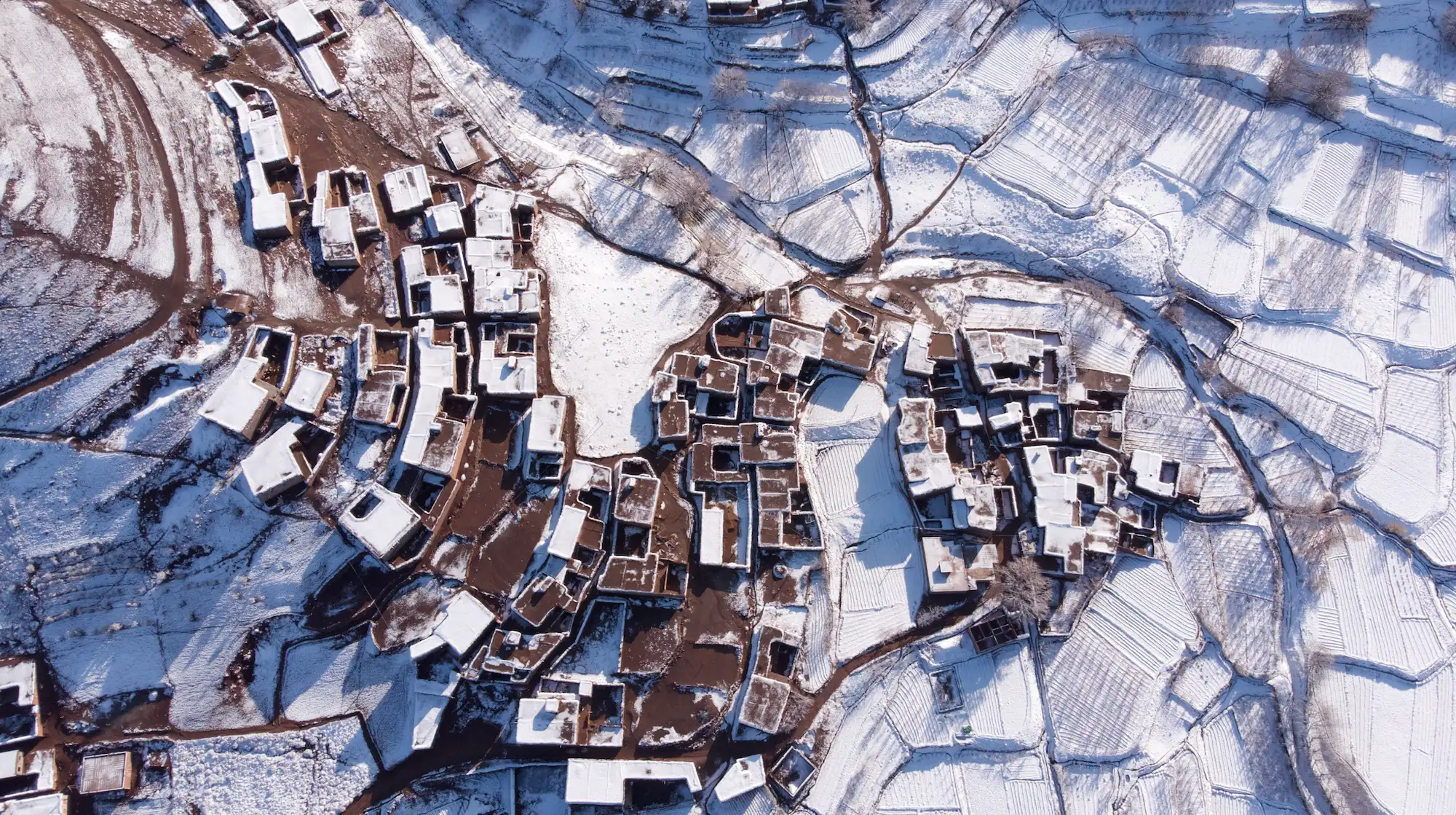
From November to March, the valley remains accessible, and walks in the snow are stunning. High passes and the summit are reserved for winter hiking, requiring appropriate guidance.
Do I need a guide to hike in the happy valley?
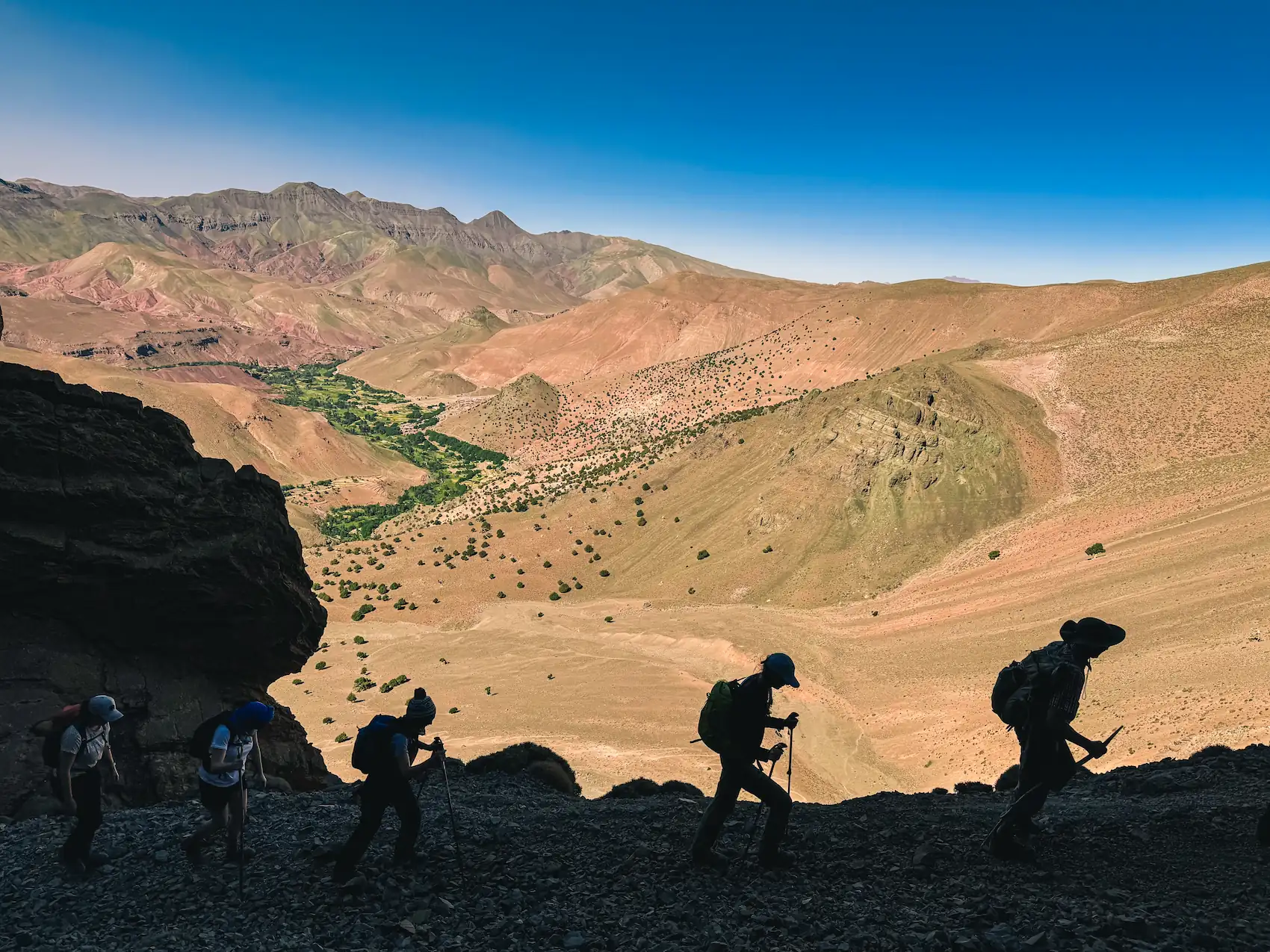
For walks along the valley floor, no: the paths between villages are easy to follow. For the passes, ridges, and anything involving the M'Goun, yes, absolutely. Not just for safety as mountain weather changes quickly and there are no trail markers up there. But because a local guide transforms the entire experience.
With Brahim or Ahmed, hiking becomes something else entirely. In every village we pass through and every threshold we cross, we speak Berber, a language of hospitality. "Atay," the word for tea, is likely one of the most common words in the High Atlas. Not two hours go by without a man or woman inviting you to share a glass that's minty, very sweet, and served with bread dipped in olive oil. And if it is offered ten times a day, the answer is yes, ten times over, without hesitation. We take the time for tea, we speak little, and we enjoy the softness of the rugs woven by the women of the house. Here, time does not matter. What matters are the encounters and the connections.
Preparing for your hike: our tips
Bring well-broken-in shoes, a fleece even in summer because evenings at 2,200 meters are cool, a cap, and a water bottle. We provide filtered water at the start. Day hikes are accessible to anyone who walks regularly. For the M'Goun, plan for a bit of training in the weeks beforehand.
From the ecolodge, where Ahmed and Nejma make you feel at home from the very first hello, we organize everything: guides, muleteers, picnics, and transfers from Marrakech. Write to us with your dates and fitness level to book your stay, and we will put together the program together.
In the Aït Bougmez valley, every day is much like the last. And that is exactly what makes it so wonderful.