Trekking and hiking in the Bouguemez Valley
Diving into the Ait Bougmez Valley in spring is like signing for a trip back in time. Here, at the foot of Azourki and at an altitude of 2200 meters, Morocco is renewed every year to the rhythm of the flowering of the apple trees and the melting of the snow.
Diving into the Ait Bougmez Valley in spring is like signing for a trip back in time. Here, at the foot of Azourki and at an altitude of 2200 meters, Morocco is renewed every year to the rhythm of the flowering of the apple trees and the melting of the snow.
To get there, it is already, if not an adventure, at least the acceptance that the place is deserved and that at the end of a track, everything is nothing but Berber calm and serenity.
Around 4 hours of driving separate a modern and agitated Morocco from a remote and silent Morocco: crossing the Tizi-n-Tirghist pass (2629m) means closing the door to modernity for a while and opening your senses to authenticity.
Welcome to Berber lands!
A single inflator for the whole village
When Saïd Marghadi (mountain guide and creator of the Touda ecolodge in the Valley) suggests the discovery of the region, it is a panel of smiles and encounters that should be expected. And when you reach the Touda terrace, you quickly realize it. In the village of Zawyat Oulmzi, Touda overlooks the village and embraces the valley in all serenity. Fatima and Nejma, who take care of it, make the first hello an invitation to feel at home in all simplicity.
We already feel that it will be pleasant to live, eat and sleep in this unique place, bathed in the play of light and shade of the High Atlas.
The village not far away seems to live to the rhythm of the seasonal cultures that nourish it, the men and women who work there, the discreet calls to prayer that recall past hours, and soccer matches that look like any other in the world, bringing people together.
A single inflator for the whole village is stored in Touda, and every morning, a player comes to give shape to the ball so that the match can start. Why only one inflator? And finally why not? Simple anecdote? Obviously yes, but that says a lot about the general tranquility that reigns here and that makes this village and this valley an allegory of the present time and of the community.
A valley of cultures and smiles
All we needed to do was turn our eyes to the green plain to feel this sense of collective serenity. The valley is teeming with peace and quiet. The time is right for carrot growth, for plowing by mules, for potato plantations.
A few steps away, a group of men are busy climbing the wall of a house. There are five, ten, more if necessary and if possible, the work is unique, the work is plural.
Hike where please
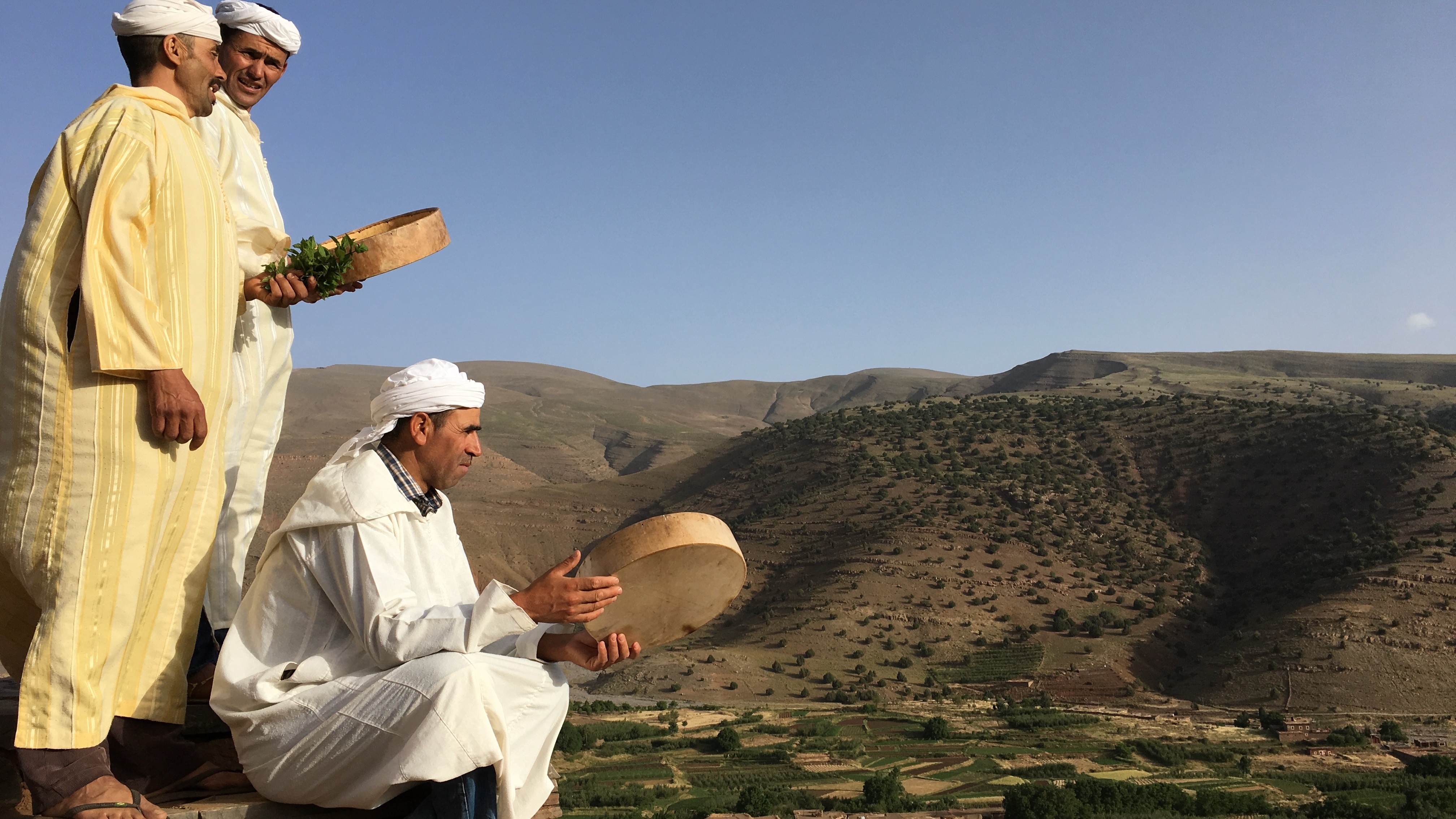
Among these men, Brahim and Ahmed, our guides on the trails during these few days. Farmers, guides, handymen of all kinds, song at the tip of their lips and ingenuity at their fingertips, it is through their eyes and in their footsteps that the region's beautiful hikes take place.
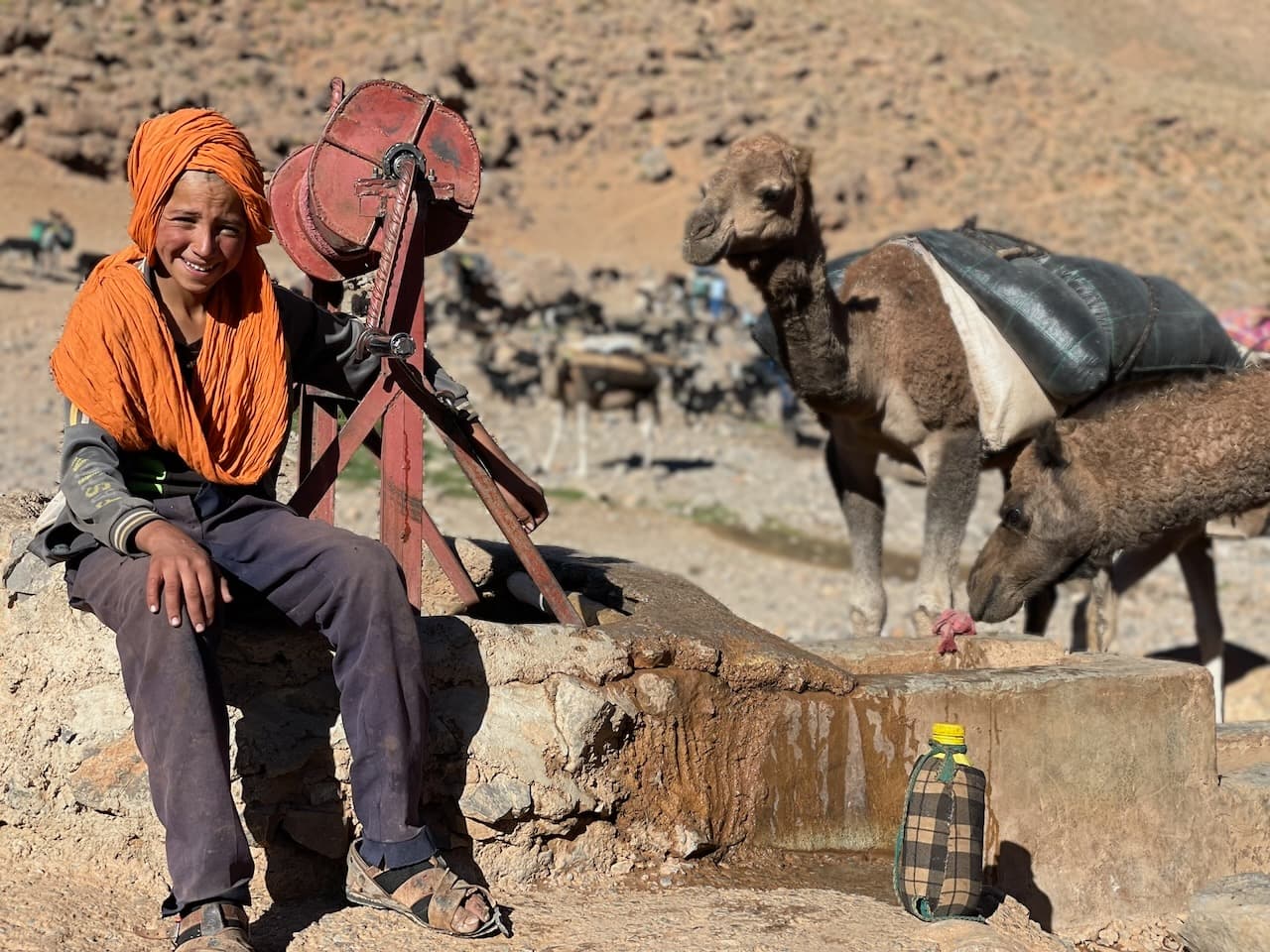
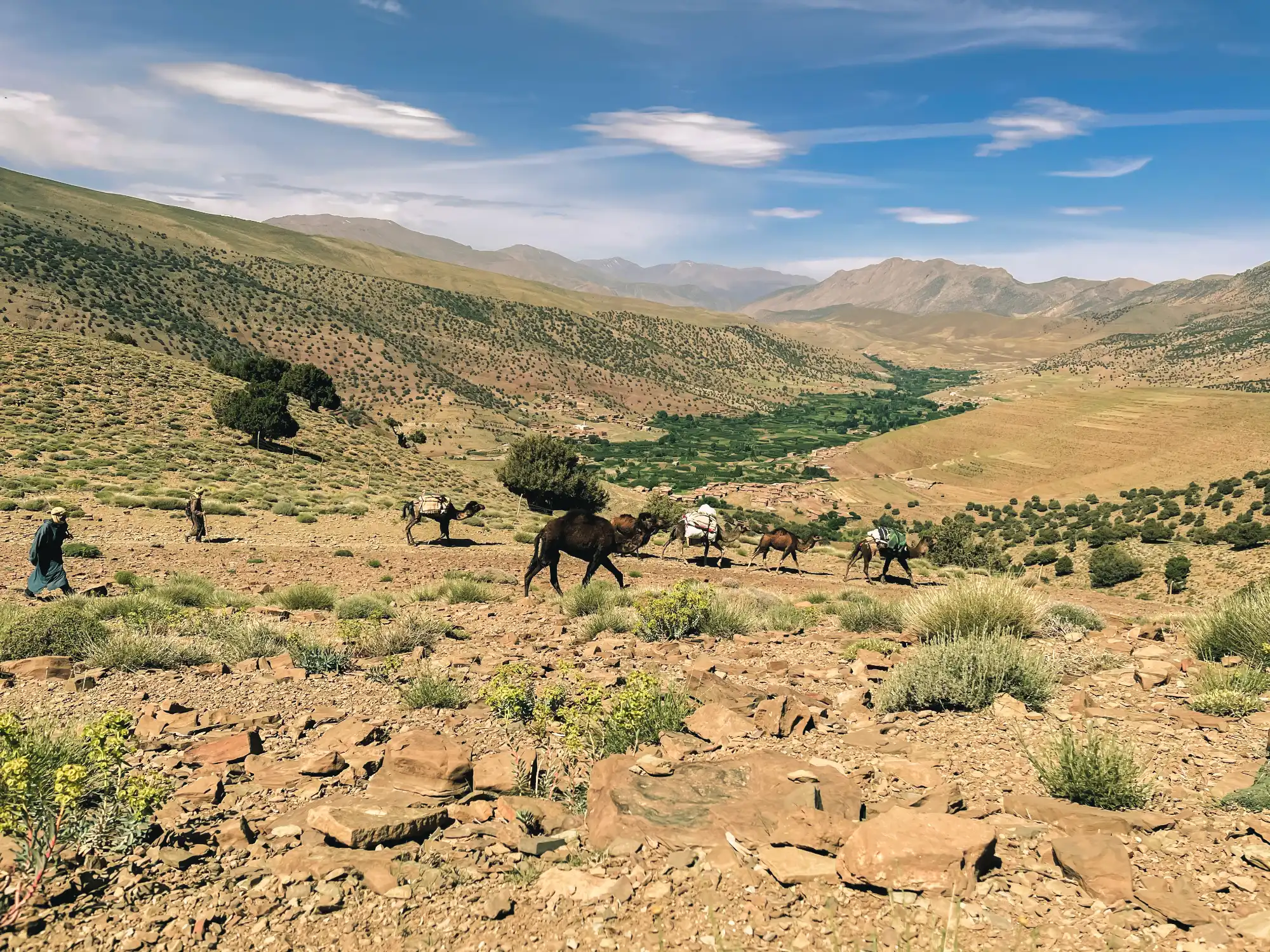
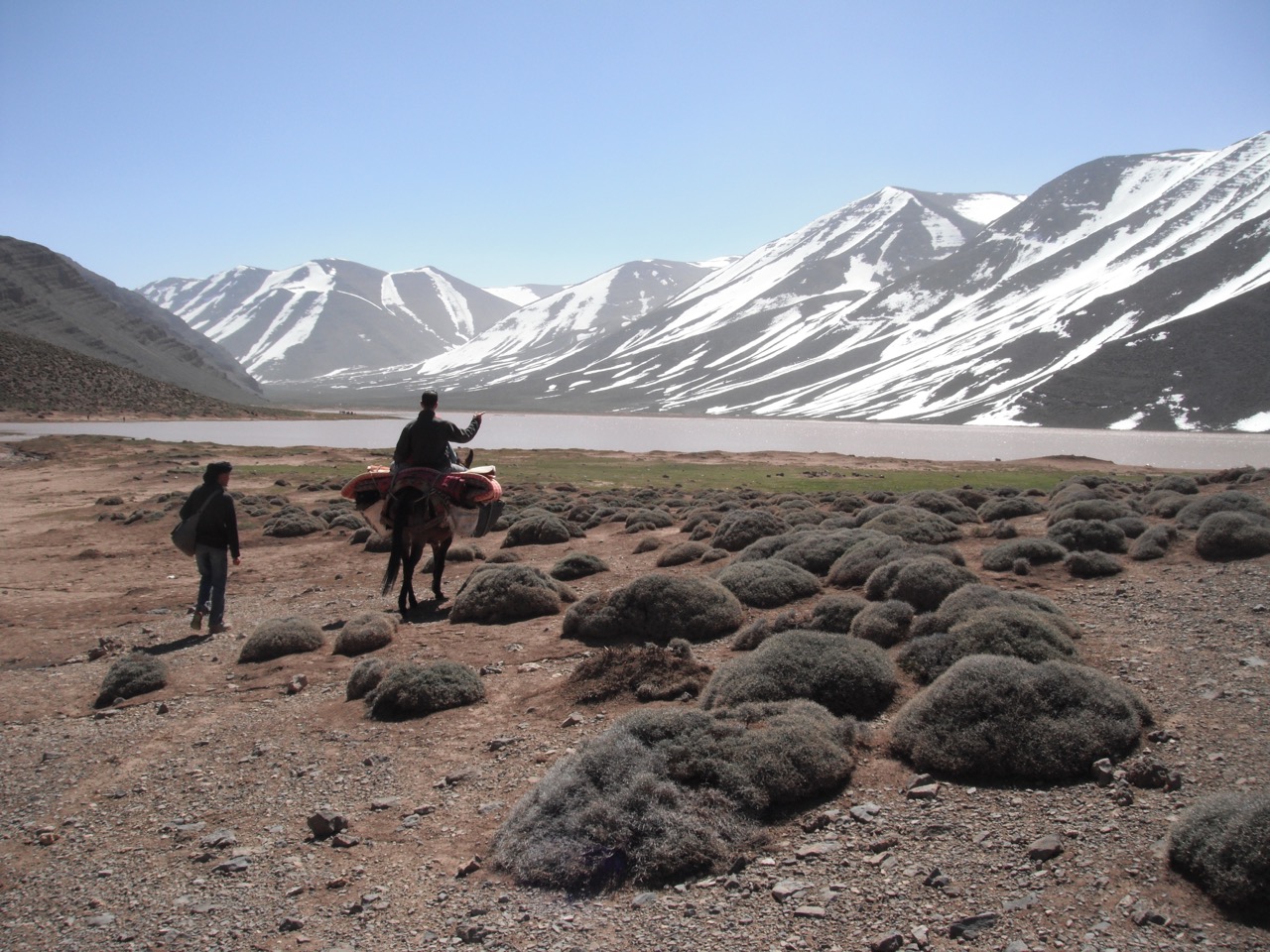
First, by easily exceeding the 350m altitude difference of the walk, we discover a vast steppe that is home to an earth-colored lake: Izourar. The spectacular, almost lunar landscape is home to nomads and their herds during the transhumances in May. Following the outline of the lake on this day allows you to appreciate the atmosphere, the isolation, the silence.
The next day, the tone changed as we went down into the valley. To the city of Tabant, it is an itinerary this time sparse of cultivated fields, countless villages populated by children, canals irrigating everything, water and splashes of life.
Crossing Igelouane, Ifrane, Rbat and so many other villages, the tourist like me follows in her footsteps the same paths taken by the man who leaves for the field or by the child who runs to reach the school. An allikum salam exchanged, without suspending the current task and life goes on.
By slowly following Brahim our guide of the day, we are part of a peaceful walk, attentive to what is around us. The mules that accompany us, very practical for carrying children, do not encourage us to speed up.
Sometimes, in the shade of a holm oak or a juniper tree, Brahim offers dried fruits, and we take the opportunity to exchange the names of the peaks, discuss lifestyles, traditions.
The children coddle around, sometimes doze off, and suddenly regain their energy when we get to Ibaklliwn. This is a rendezvous with prehistory and observation of dinosaur tracks. Well, that's right, they're not the only ones to compare their sizes to those of prehistoric animals! Although discreet and not very highlighted, one only discovers the site by asking the question to a resident. But in Ibaklliwn, as elsewhere in the region, dinosaurs matter less than the wind and its western rain, than the passage of the rare pick up in the valley...
The first sip of tea... or the repeated tea breaks.
In all the villages we have crossed, all the thresholds we have been able to cross, we speak Berber, a hospitable language. “Atay”, to say “tea” in Berber, is undoubtedly one of the most frequent words in the High Atlas. Not two hours pass without a man, a woman, inviting you to have tea.
With mint, very sweet, with bread dipped in olive oil. And beyond the surprise of the first sip this sweet, we find ourselves enjoying it always that way. And if it is offered to us 10 times a day, it will be 10 times yes without hesitation.
We take time for tea, we talk little, we enjoy the softness of the carpets woven by the women of the house, we get used to the relaxing darkness. We simply take the time, because there is no hurry here. The chores have to be done, and they will be done.
The head of the family fills the glasses, serves again, makes sure that the teapot is still full... We get a taste for these suspended, easy, stolen moments as the hour goes by. And we understand that in the valley of happy people, time does not count. What matters are meetings, sharing.
In the kitchen, the dishes sing
In her kitchen, Fadma won't say otherwise. In an incessant ritual of peeling, kneading, washing dishes, she agrees to share her daily life with us for a day. But as if we were not there, because “there is a lot of work!” So, it's obvious, we're rolling up our sleeves.
First of all, it's time for bread, and for that famous flick of the wrist buried in the dough that reminds us that being sporty is definitely a very Western appreciation. It is then Fadma's mother-in-law who puts the loaves in the oven and watches over them. Then comes the time to prepare the tajine, to cut the vegetables, to brown the chicken sprinkled with cumin that we will not know how to do without... Not to mention boiling the water for the tea, the umpteenth, all with the youngest, barely 9 months old, twirling around behind his mother's back.
In this tiny room where every day Fadma cooks food for her seven children, her husband, and her stepparents, Fadma juggles and makes the pots sing. Once the lid is down, a huge walnut dish is already seared to prepare the pancakes. Oil, flour, lukewarm water and off you go. With a quiet smile that seems to say that “it's life” and that doing it without (smiling) would be doing it anyway, so it's better that way.
It is in this endless jingle that Fadma continues the day until the evening, where she will go to the fields to bring the grass back to the animals, then start eating soup, and if necessary, again bread for the next day... Inshallah.
And I admit, I got away a little earlier, because... it's tiring to smile all day!
In the Ait Bougmez, the days follow one another and are similar. And that's what's so good.
Auteur
Saïd Marghadi
Publié le
Feb 24, 2018
Partager