%20(1).webp)
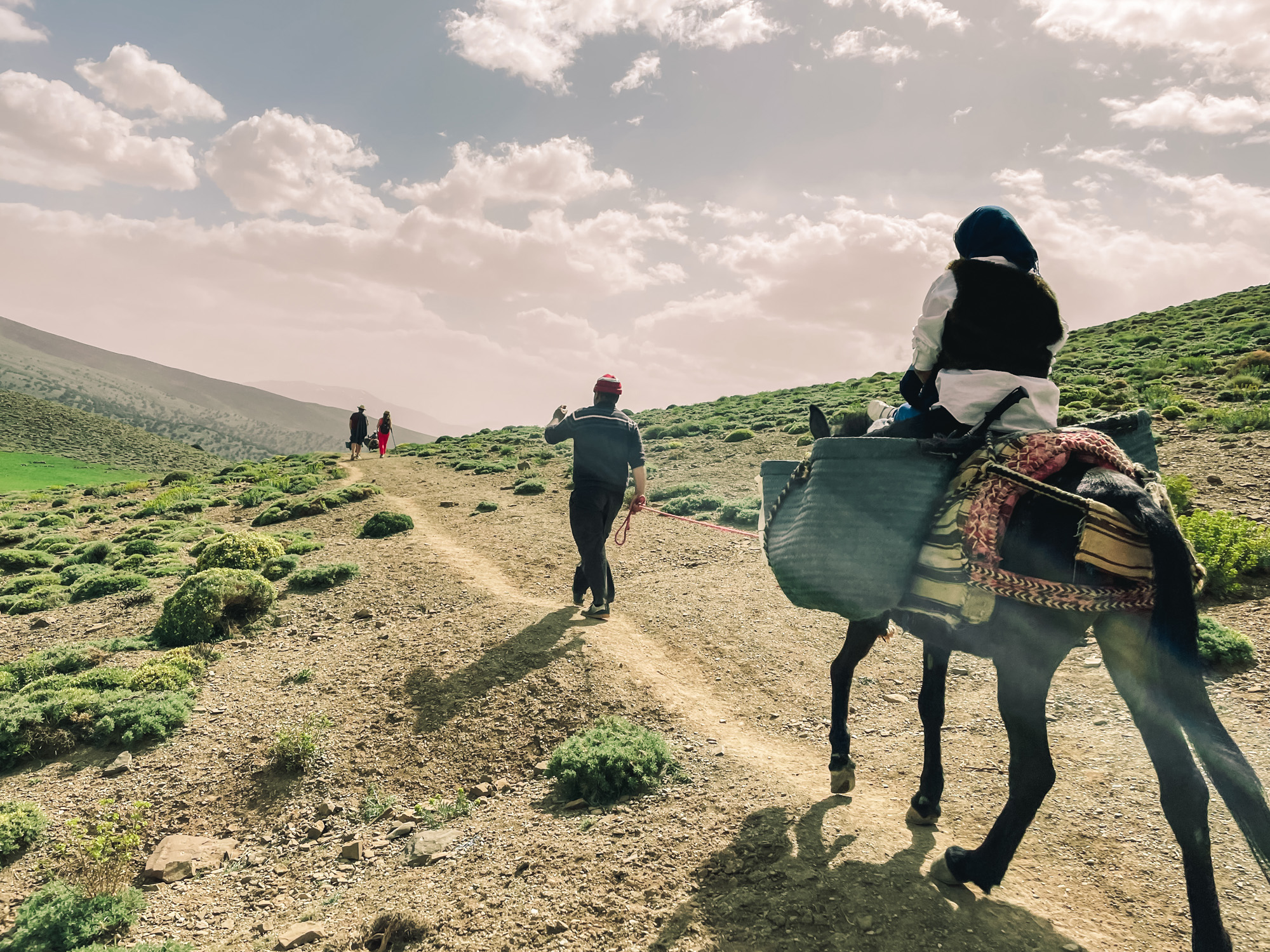
©photo - Guillemette Cornefert
« Inch'allah. »
This is often how a guide responds when a French child (or any other), with tears in their eyes at departure, invites them to visit in Paris. A polite, warm "Inch'allah" that, however, very often means: no. Or more precisely: probably never.
I've witnessed this scene dozens of times. In Egypt, Morocco, and elsewhere. Between a guide and a family, a guide and their clients, or between Ecolodge staff and travelers with whom genuine bonds had formed. For a few days, meals, stories, and laughter are shared. Children's names are learned, parents' habits noted. The connection seems sincere. Then comes the time for departure.
The child, however, doesn't understand why this relationship couldn't continue. They are still unaware of what lies behind the adults' embarrassed smiles.
Because to travel to France, their guide would have to overcome an obstacle course: put together a complex application, demonstrate sufficient resources, prove they have every reason to return home, and convince the authorities that they pose no "migration risk." Despite all this, there's a high probability their application will be denied, often without a valid explanation.
This child's passport opens doors to nearly 185 countries. Their guide's, barely twenty.
This reality is not a minor detail. It lies at the very heart of what we call the tourist encounter.
For years, the travel industry has celebrated openness to the world, the discovery of others, and cultural exchange. These promises are omnipresent in brochures, communication campaigns, and institutional discourse. Yet, an essential part of the story is rarely told: this encounter is profoundly asymmetrical.
We travel freely to territories whose inhabitants, in many cases, would not be able to visit us. We speak of exchange, yet the possibilities for movement are far from reciprocal. We highlight human connection without always acknowledging the invisible borders that limit it.
Should we stop traveling then? Certainly not.
But traveling should also mean seeing the world as it is, with its beauties as much as its contradictions. A truly impactful journey isn't just one that offers spectacular landscapes or pleasant memories. It's also one that confronts us with uncomfortable questions.
This is where tourism professionals have a particular responsibility. Their role shouldn't be limited to selling a destination or crafting appealing narratives. They can also help give meaning to travel, shedding light on the social, economic, and political realities that shape territories and the lives of those who live there.
Tourism storytelling is often used to embellish, simplify, or make things desirable. It could just as easily serve to reveal, contextualize, and humanize. Not to make travelers feel guilty, but to enable them to better understand what they are discovering.
In a world saturated with images, formatted narratives, and staged authenticity, the true value of travel perhaps lies in its ability to bring us closer to reality. A reality that is sometimes complex, sometimes unsettling, but always richer than postcards.
If tourism wants to continue to claim social and cultural utility, it must embrace this dimension. Otherwise, it risks becoming just another industry, dressed up with virtuous labels and benevolent rhetoric.
At a time when artificiality is gaining ground in our experiences as well as our narratives, it may be time to restore what is true to its rightful place.
%20(2).webp)