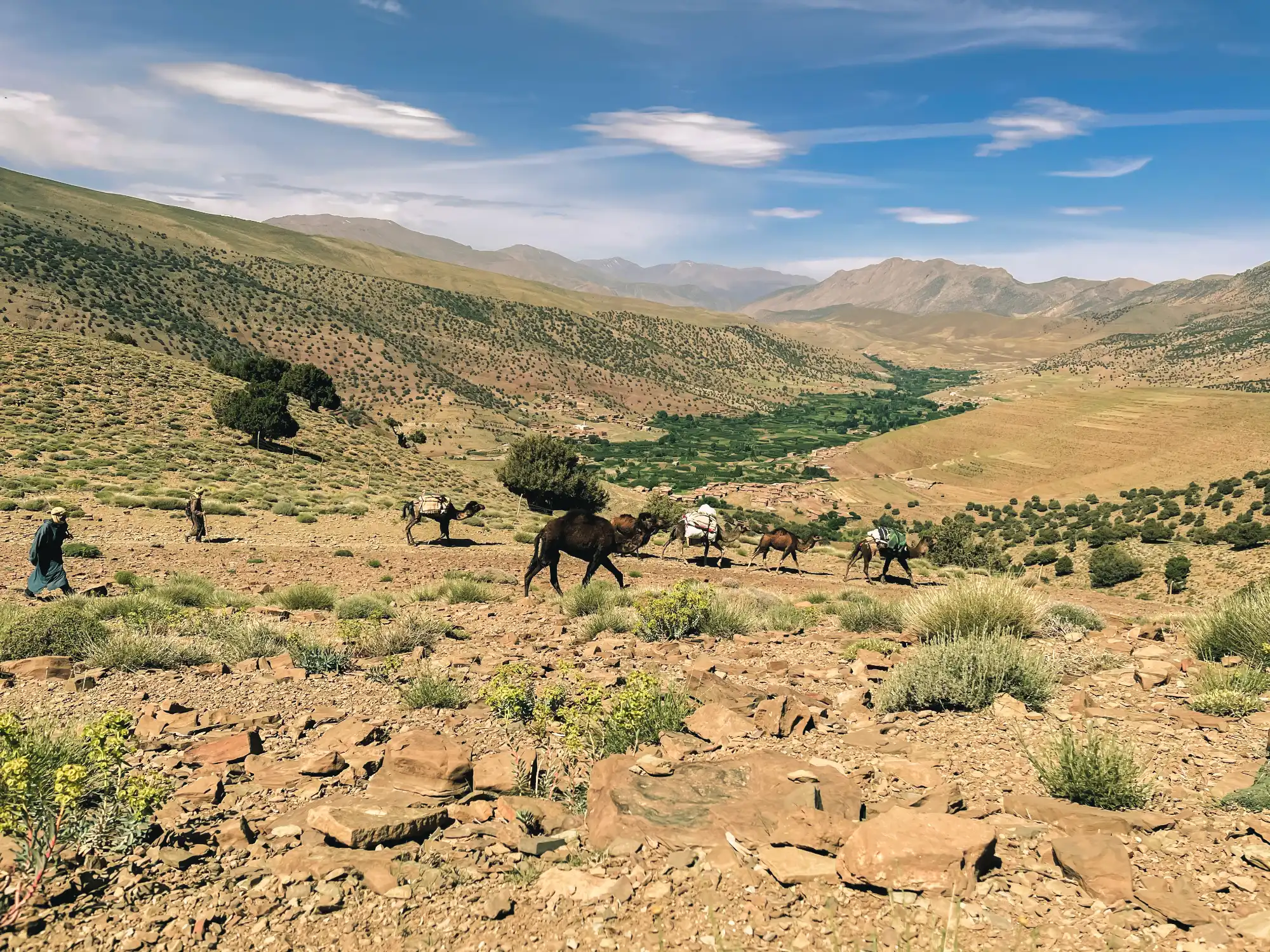
I left Marrakech more than 4 hours ago and I am finally entering the valley that is called “the Valley of happy people”: that of the Aït Bougmez. At the feet of the giants M'Goun, Waougoulzat and Azourki lies a fertile valley where the contrast between aridity and the red of the mountains and prosperity and the green of the fields is striking. Taking a track that crosses its many villages, I have the opportunity to observe the men plowing the fields using horses and mules, but what surprises me even more are these women who are grouped by the river, from a distance they seem to be chatting while striking the water with wood, but on closer inspection they are doing their laundry. Clothes, each more colorful than the next, are delivered to the heat of the sun on bushes bordering the river. Their muscles are agitated to vigorously scrub the laundry, meticulous, they track down the smallest task and any overly curious tourists approaching with their cameras.
I finally arrived in the village of Zawyat Oulmzi, the highest and remote village in the valley, to spend a month there. But come to think of it, I didn't show up! My name is Anaïs, I am a student in the first year of a Master in Tourism and Sustainable Development of Territories in the south of France. I am therefore doing my end-of-year internship in the Touda ecolodge and with the association “L'Arbre du Voyageur” which works for sustainable development in the valley. Let's go back to our sheep, in fact there are a lot of sheep in the valley, they are used in particular to feed its inhabitants and also to provide wool for the weaving of the famous Berber carpets, renowned for their quality and authenticity.
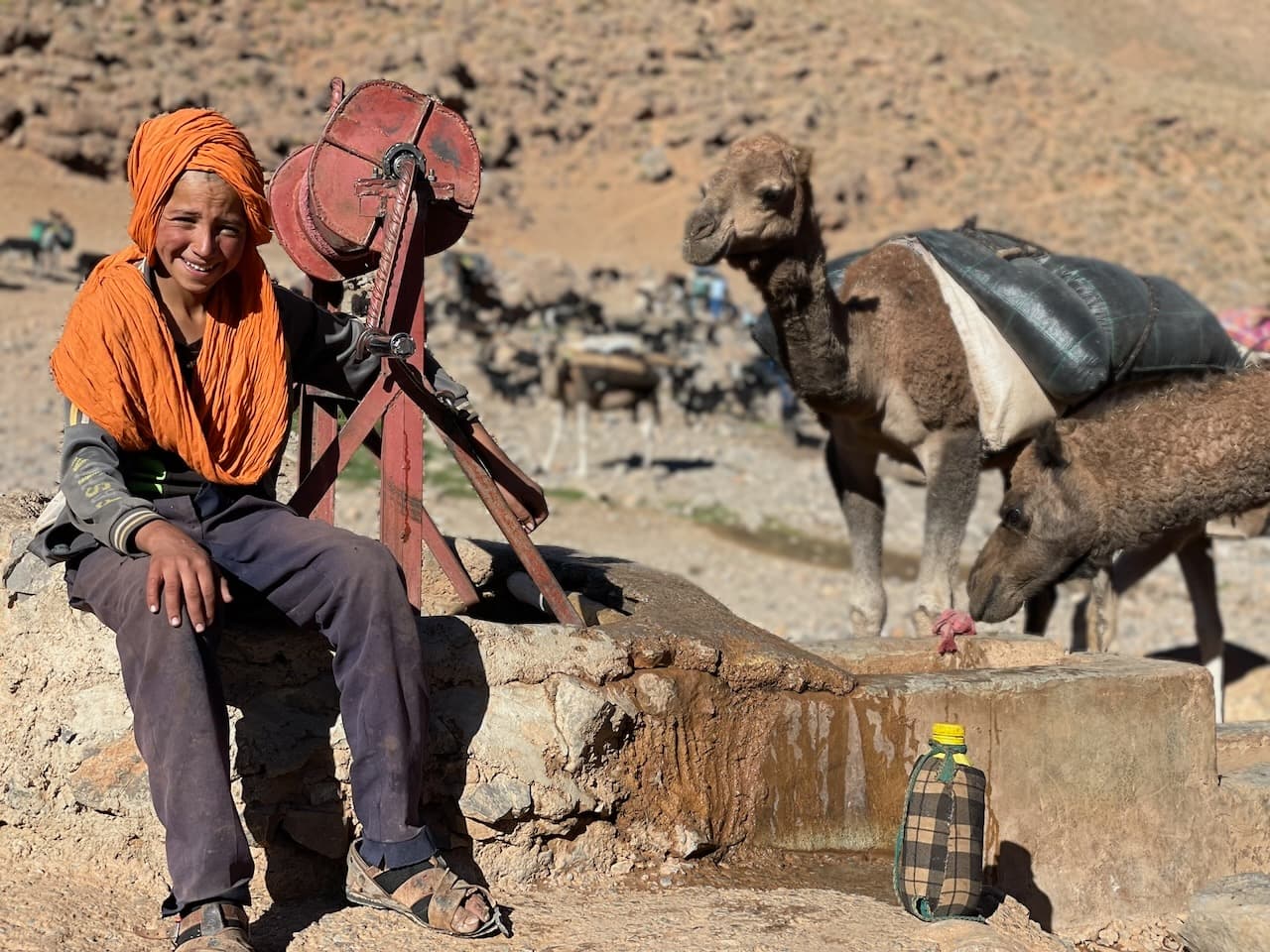
Once I arrive in the village I meet Ahmed, the one who will take care of me during this month, as well as his family with whom I am going to stay. What a chance for a tourist, a visitor, a person from outside the valley, to be completely immersed in a Berber family from the High Atlas, the Oubouya family what's more, it is the family of the village chief and also of the valley's tooth-puller: Ali. So I discovered the place where I was going to live and began to establish a first contact with my hosts, it was not easy to understand Berber. But luckily Ahmed speaks very good French and does the translation for me, I start to write what will be my French-Berber dictionary.
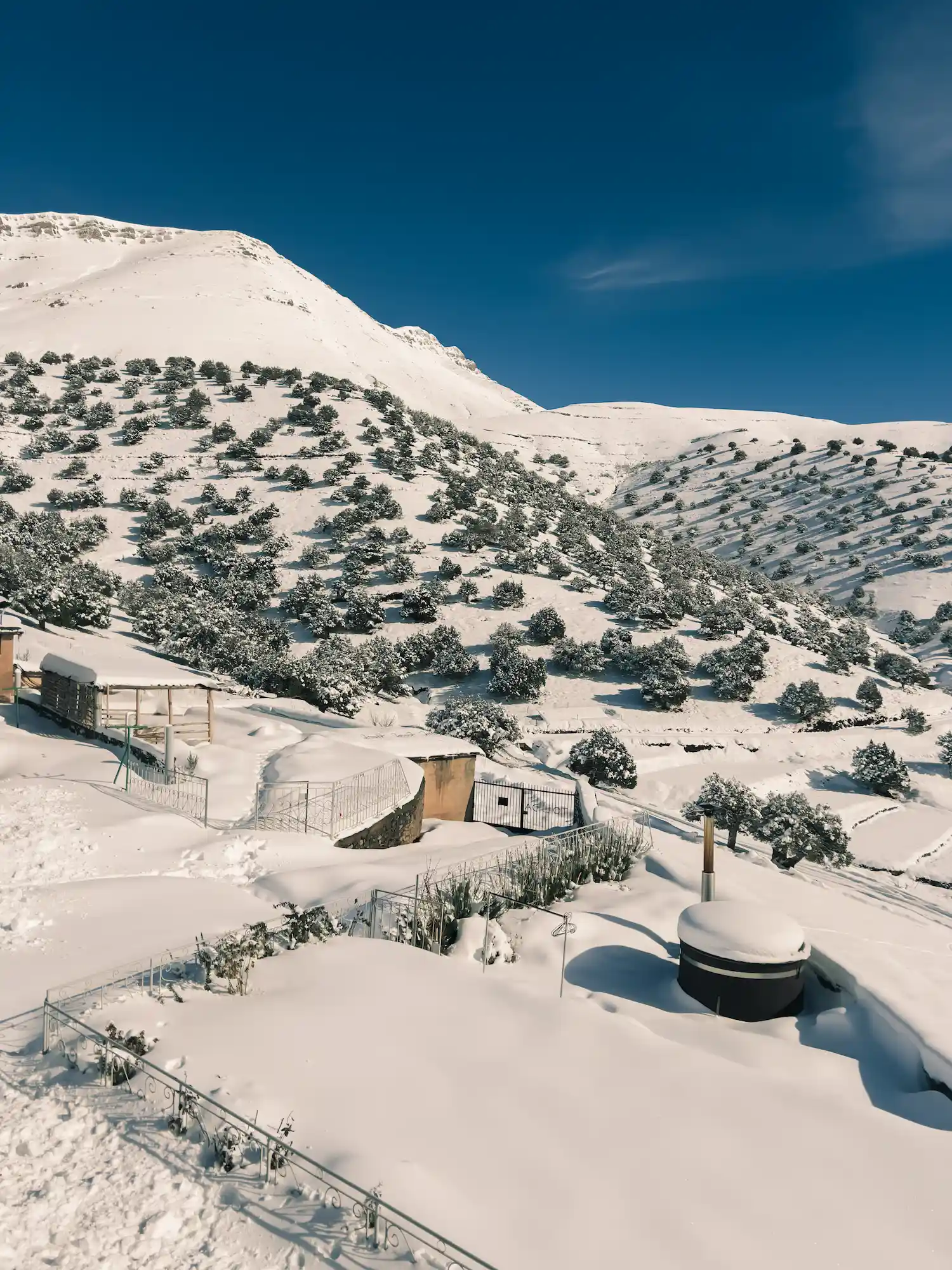
I have been getting used to this new way of life for a few days now. I have already learned how to make a tajine, to locate some peaks and to list the names of the 27 villages in the valley. Today we are going hiking to Lake Izourar, a land appreciated by shepherds who bring their animals to graze when there is food. The lake is located at an altitude of 2525m, at the foot of Jebel Azourki. We take a path that climbs to the crest line and takes us through a juniper forest. After a short hour of walking we come across the snow, the quantity of which increases as we advance. Arrived at the lake we will settle in a shepherd's hut for a picnic, and no Berber picnic without tea. Although we are 2500m away, nothing is missing: sugar, green tea, gas bottle, tea glass. Here the huts are overequipped.
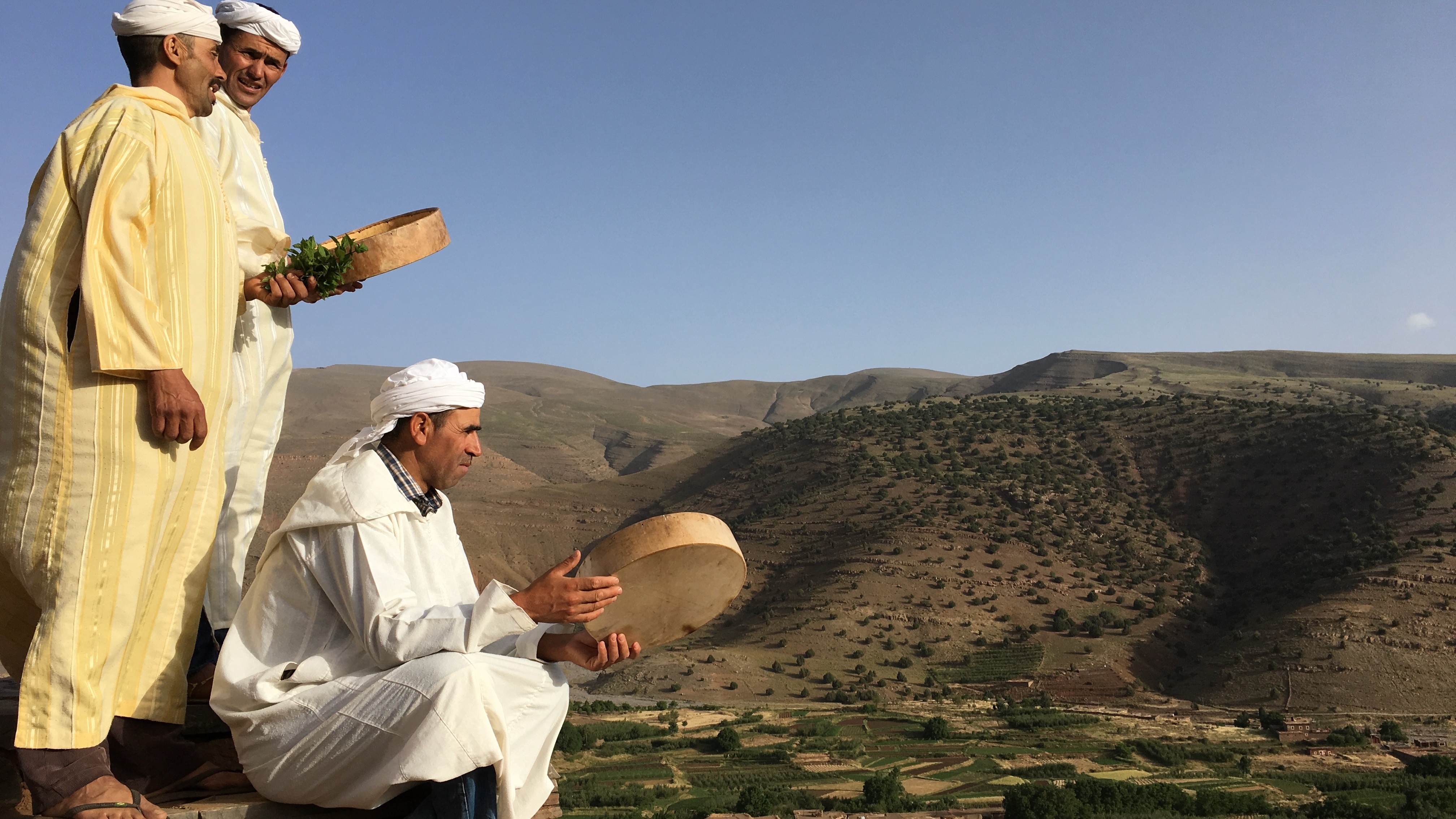
The week I stay in the village and I give a hand to Fatma, Ahmed's wife: maintaining the house, collecting mugwort, carpet weaving. But on weekends, when there are customers, I go up to Touda which, like an eagle's nest, is perched above the village. I then help Nejma, the cook and housewife, to prepare delicious food for our visitors. During the day we go hiking and when the sun sets the mood starts to rise. Armed with their bendir (goatskin drums) Ahmed, Brahim and Jma sing a few Berber songs, to the rhythm of the percussion the tourists join the happy round already formed by our Berber singers. This conviviality, these smiles on such different faces makes me well and truly aware of how unique this place is and conducive to meeting and sharing.
Auteur
Saïd Marghadi
Publié le
Feb 24, 2018
Partager