Sometimes you have to gain some height to understand a story.
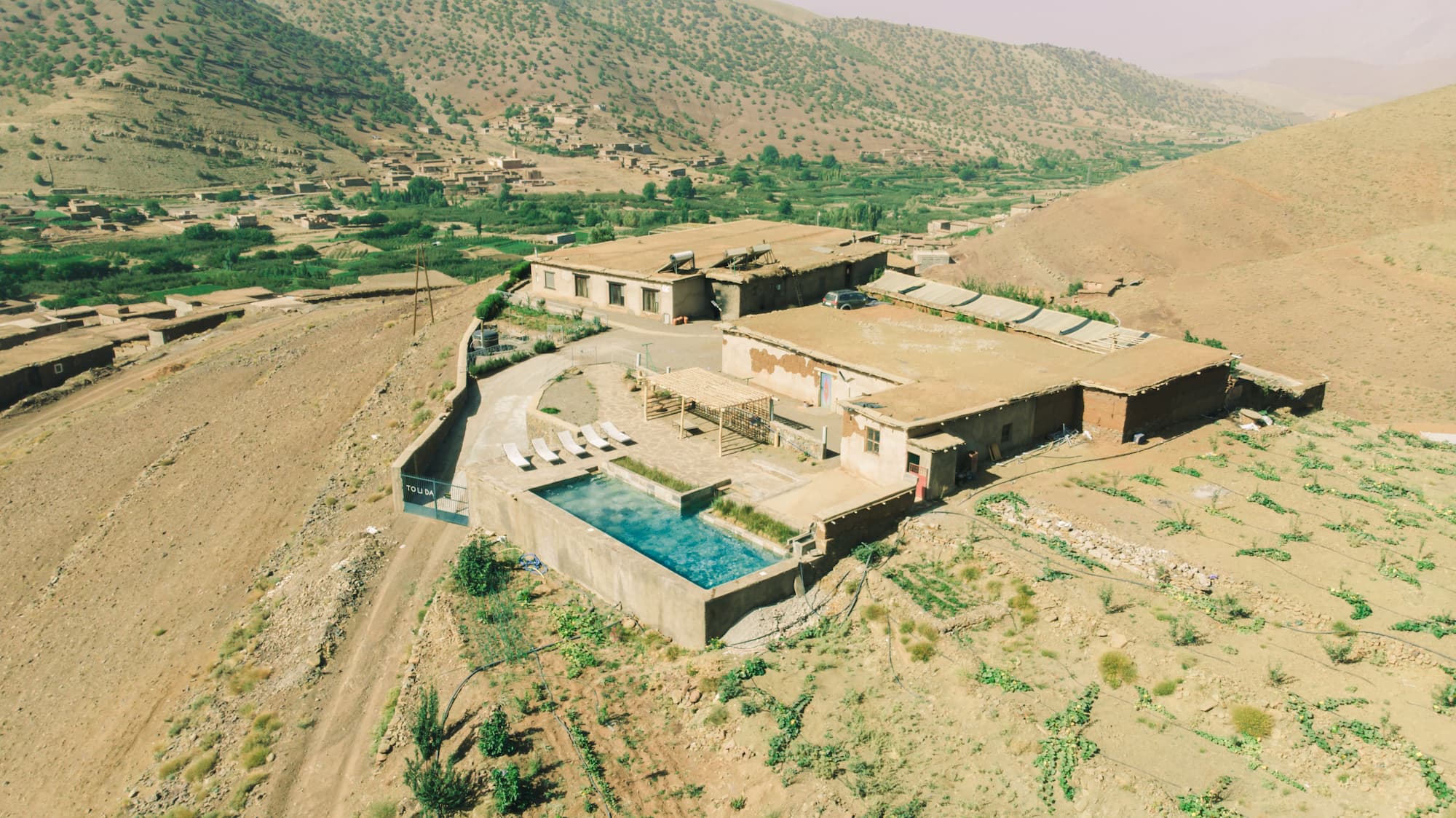
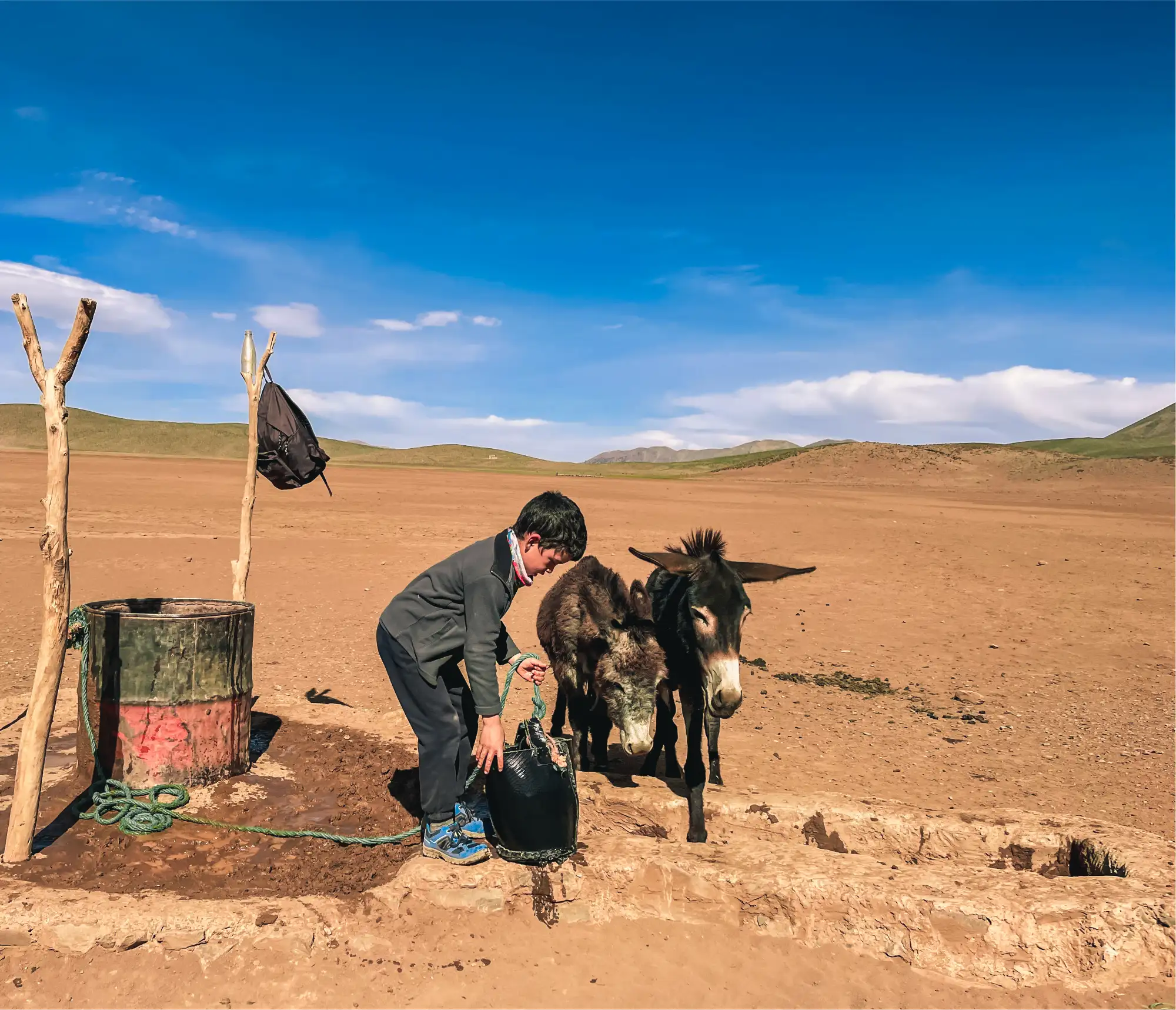
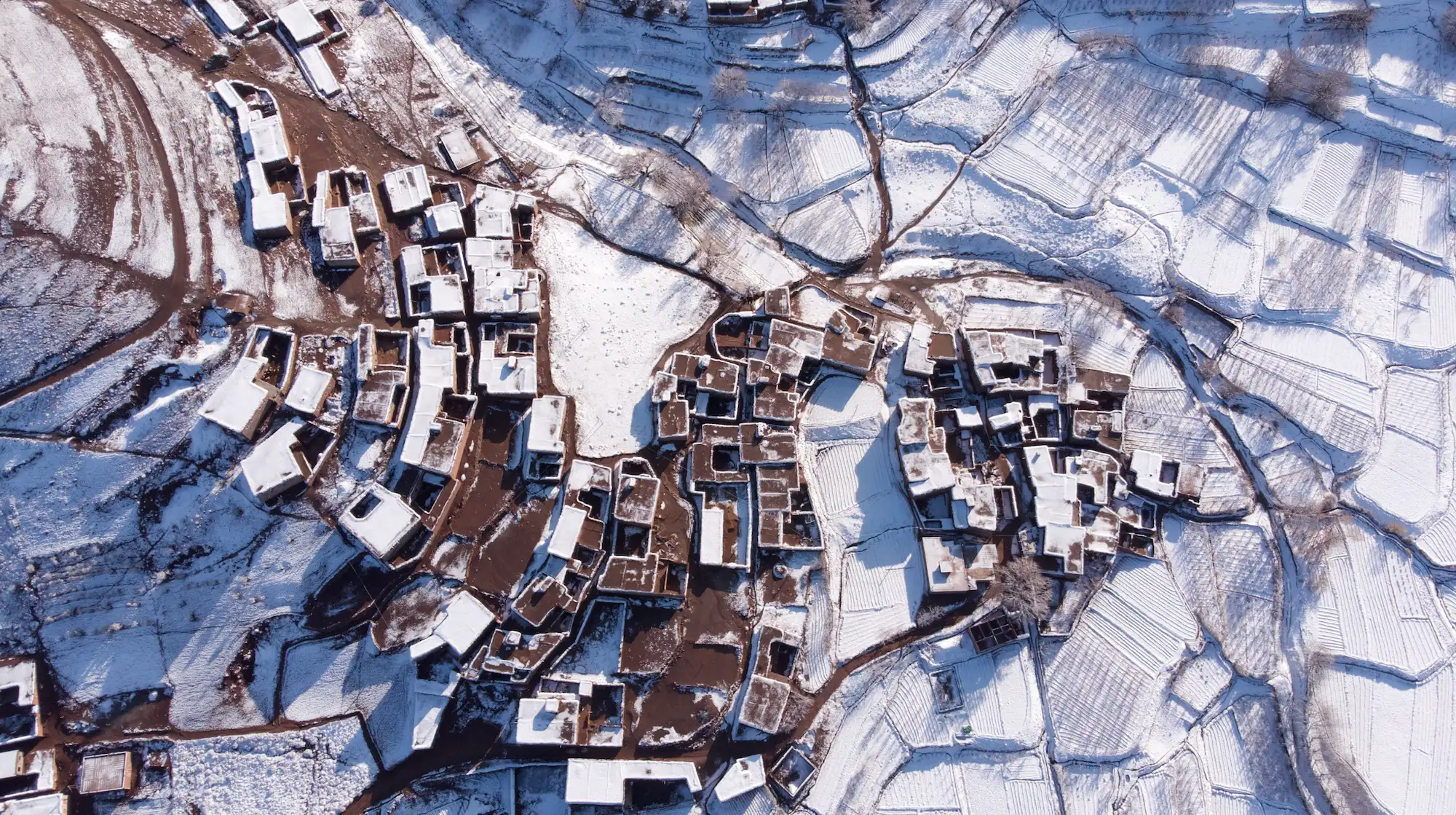
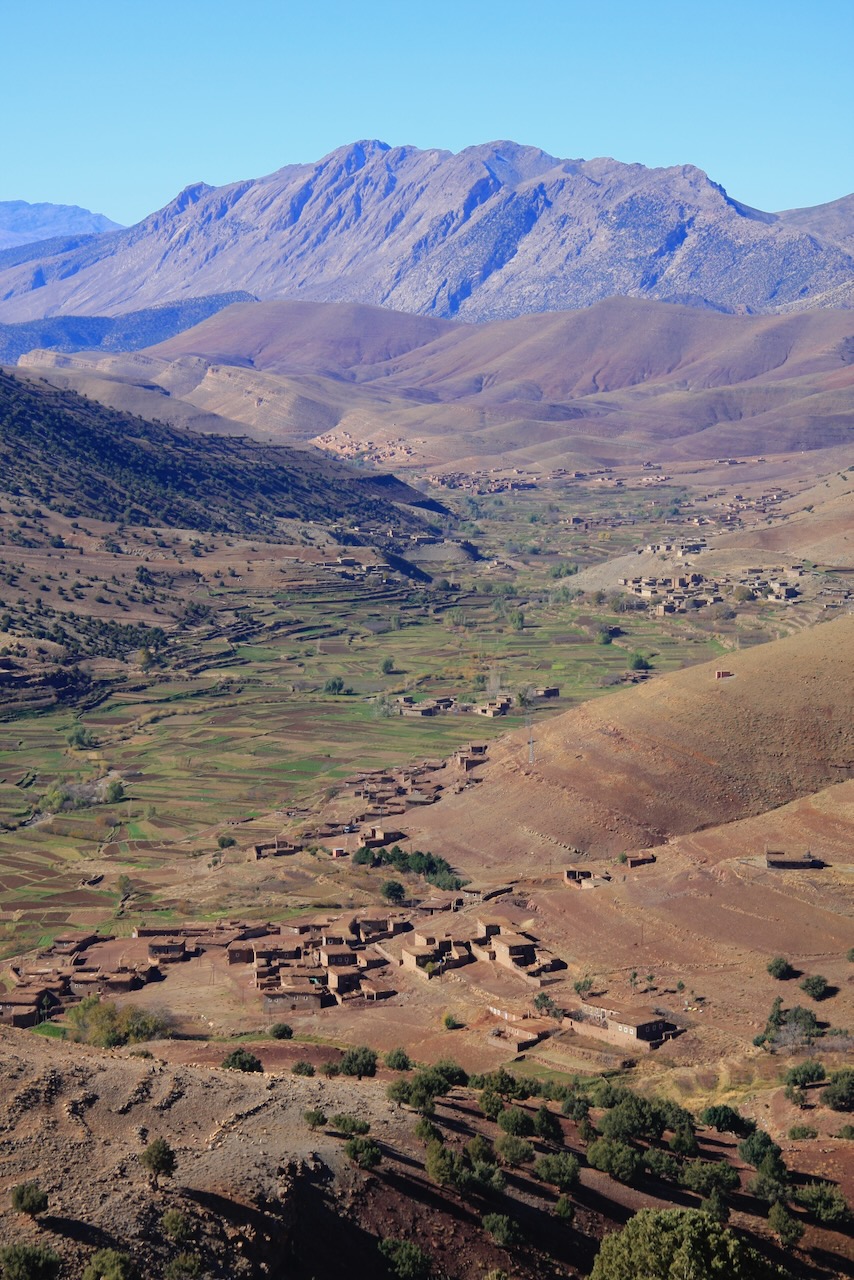
In the Aït Bougmez valley, in the heart of Morocco’s High Atlas, the mountains draw a spectacular landscape. The earthen villages seem to cling to the slopes, the fields follow the bends of the valley and, in spring, the orchards add touches of green to this mineral scenery.
It is here that a rather unusual adventure took shape over the years.
It began with Touda Ecolodge, a place imagined to welcome travellers differently.
It continued with Terre de l’Atlas, to showcase the produce and farming know-how of the valley.
And it found its structure around L’Arbre du Voyageur, an association committed to social, cultural and environmental projects.
Three names. Three activities. But one and the same story.
And above all, one and the same question: how can tourism become an opportunity for a region, rather than just another tourist destination?
Touda: it all starts with a meeting
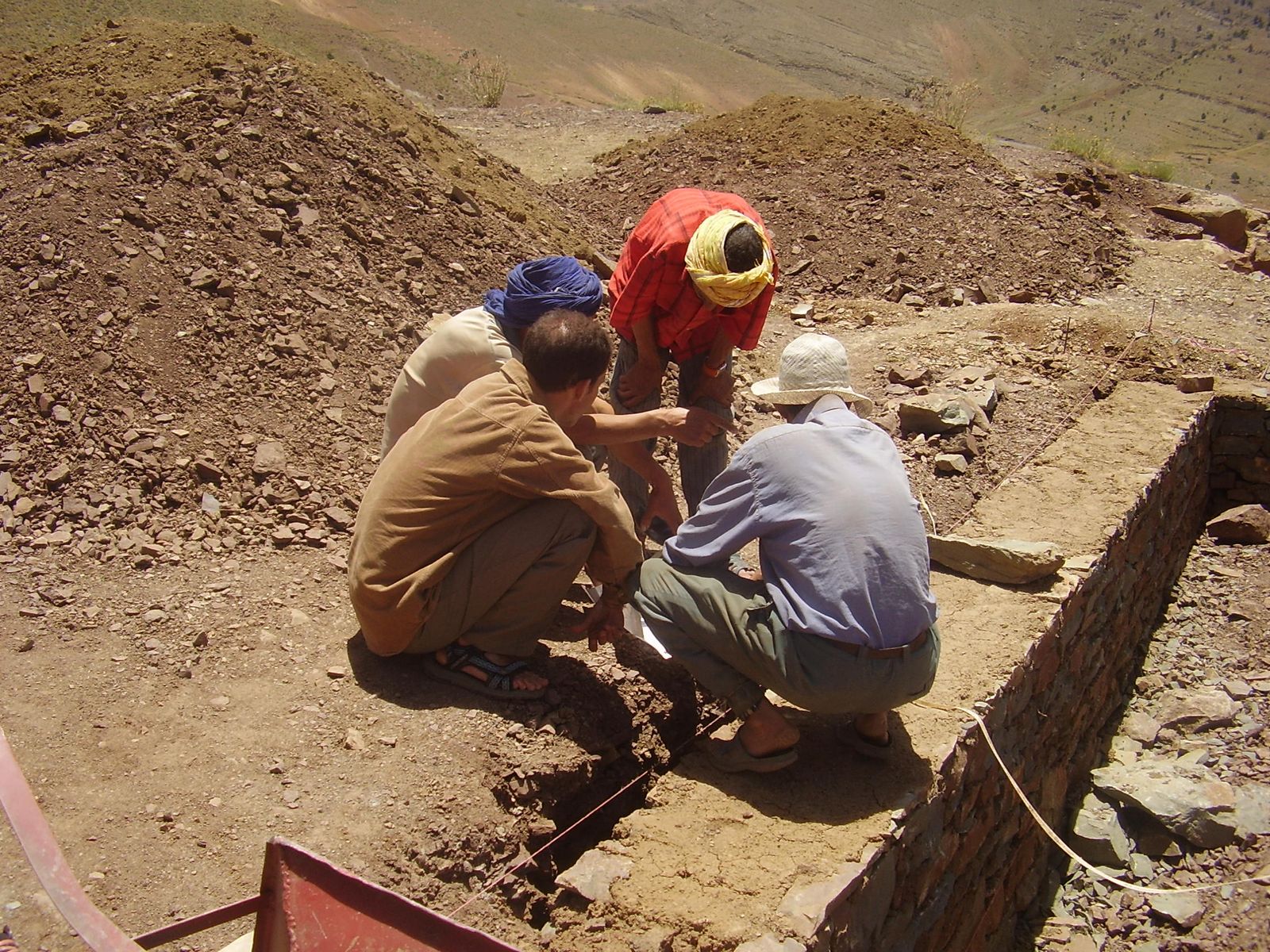
Touda’s story began in 2007, with a meeting between Saïd and Ali.
The idea seemed simple: create a guesthouse in the High Atlas.
But the project very quickly took on another dimension.
It was not just about building a few rooms to host travellers. The ambition was to create a meeting place, able to share Amazigh culture, valley life and the landscapes of the High Atlas while remaining deeply rooted in its environment.
The chosen plot is in Zawyat Oulmzi, slightly away from the village, with an open view over the valley.
And from the very beginning, a choice was made: not to build a road to reach the future ecolodge.
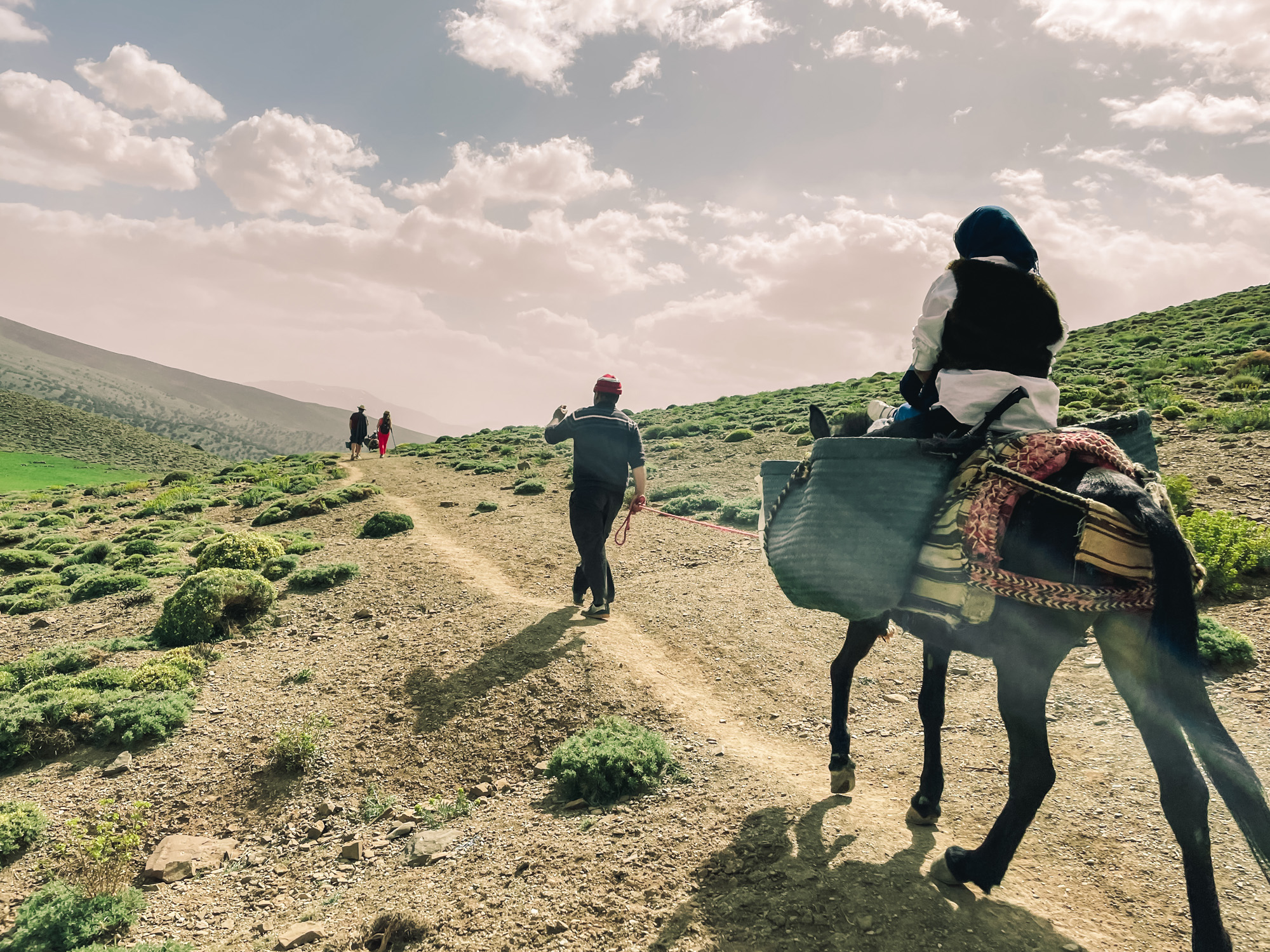
The materials were carried by mule. Much of the building work was done by craftsmen from the region. Construction moved forward with local know-how and at the pace of the mountain.
Touda finally opened its doors in 2008.
This story explains a great deal about the atmosphere of the place today.
Touda was not placed on the mountain.
Touda was born of the mountain.
A house facing the mountains
There are places you go to mainly to sleep.
And then there are places you go to slow down.
Touda clearly belongs to the second category.
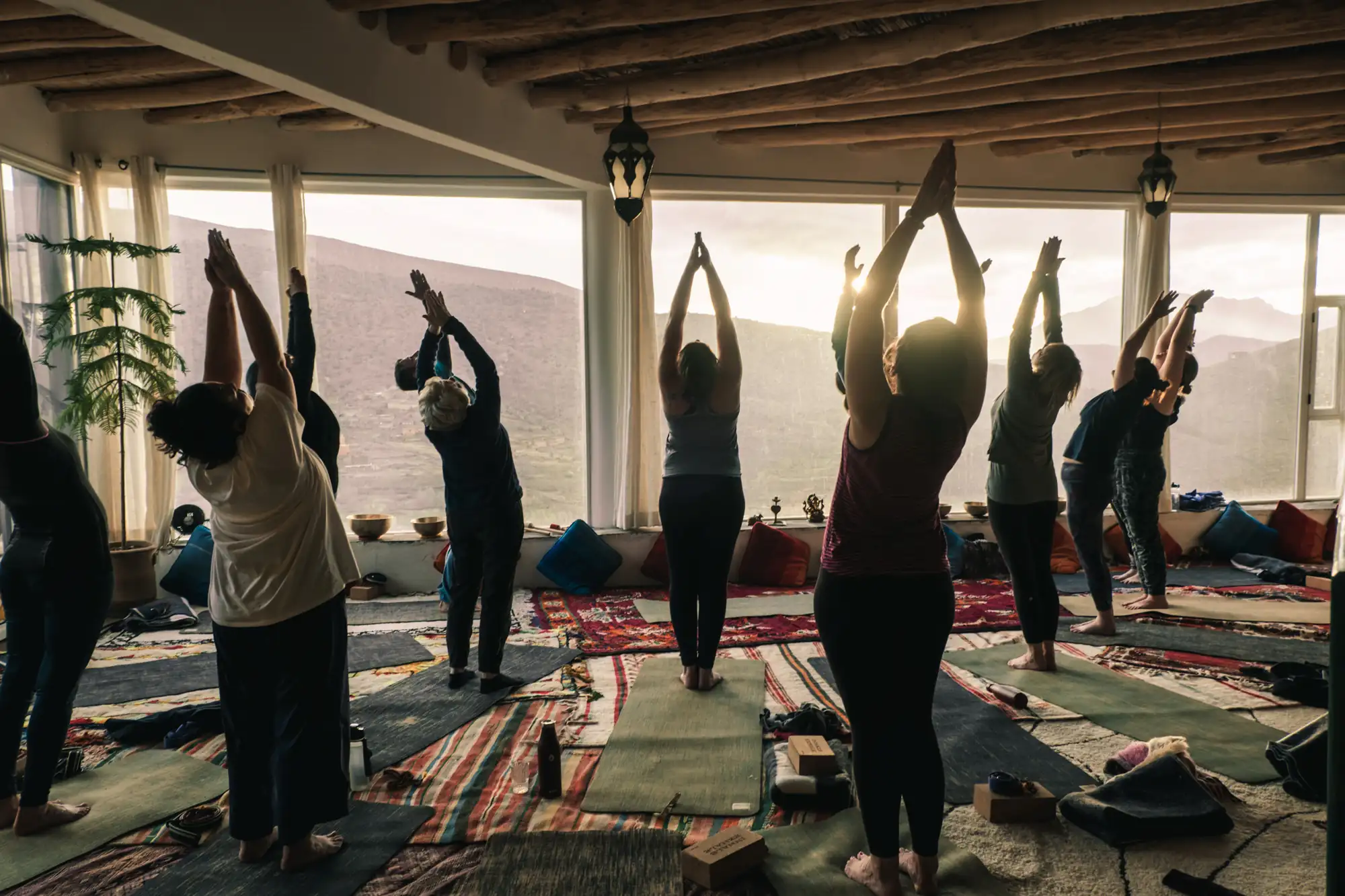
The architecture, the materials, the light and the large openings were designed to let the landscape in.
Here, the valley is not a backdrop you look at through a window.
It is part of the experience.
In the morning, the mountains set the rhythm of the day.
A little later, the trails invite you to head out walking.
Then comes the time to come back, have a tea, settle on a terrace, enjoy a hammam or simply watch the light change on the peaks.
This is probably where one of Touda’s greatest riches lies: time.
Time to walk.
Time to eat.
Time to talk.
Time to do nothing.
And perhaps above all, time to look.
Hospitality as a philosophy
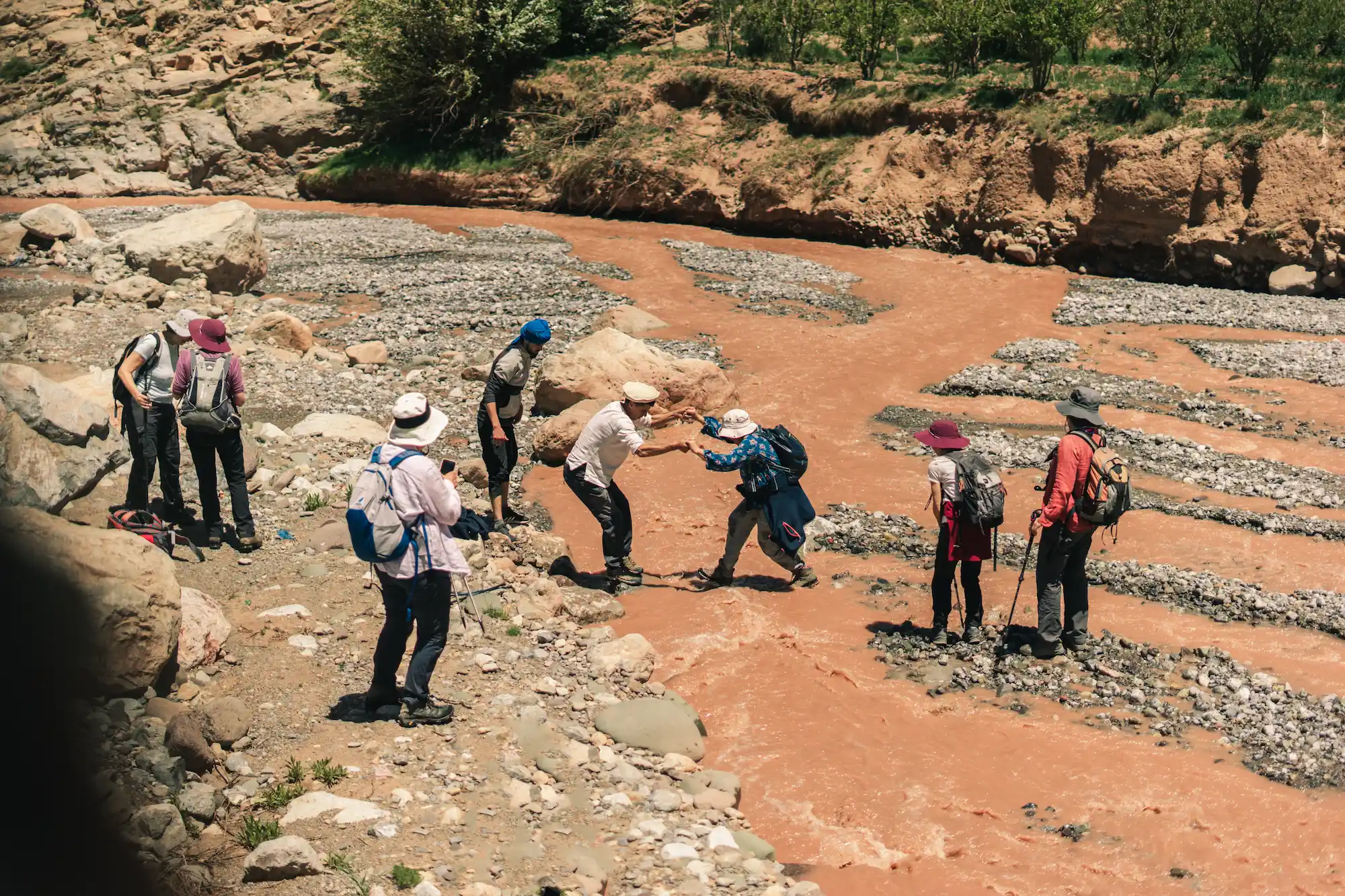
At Touda, hospitality draws directly on values deeply rooted in Amazigh culture: welcome, generosity and sharing.
The aim is not to manufacture an artificial tourist experience, but to let visitors step, for a few days, into another way of living in the mountains.
The team members come from the region or have worked with it for a long time.
Ahmed is a tooth puller, shepherd, farmer and companion on the trails.
Nejma is the queen of the kitchen.
Zakaria, a guide, helps welcome guests and also tells the story of the region through images.
And Saïd, the founder of Touda, pursues his wish to make the High Atlas a place where tourism, culture and development can move forward together.
This human dimension is essential.
Because, at heart, a trip to the Atlas should not just be a collection of landscapes.
It is the encounters that give the landscapes their story.
From the garden to the plate
This philosophy extends all the way to the kitchen.
Touda has its own vegetable garden and aims to work as closely as possible with the produce available in the valley and with the rhythm of the seasons.
It is a cuisine that tells the story of the land.
And this is precisely where another part of the story begins.
Because if you truly want to showcase a region, it is not enough to introduce its produce to travellers during their stay.
Those products also need to find their place in a local economy.
That is one of the reasons Terre de l’Atlas exists.
Terre de l’Atlas: when local produce becomes a story to take home
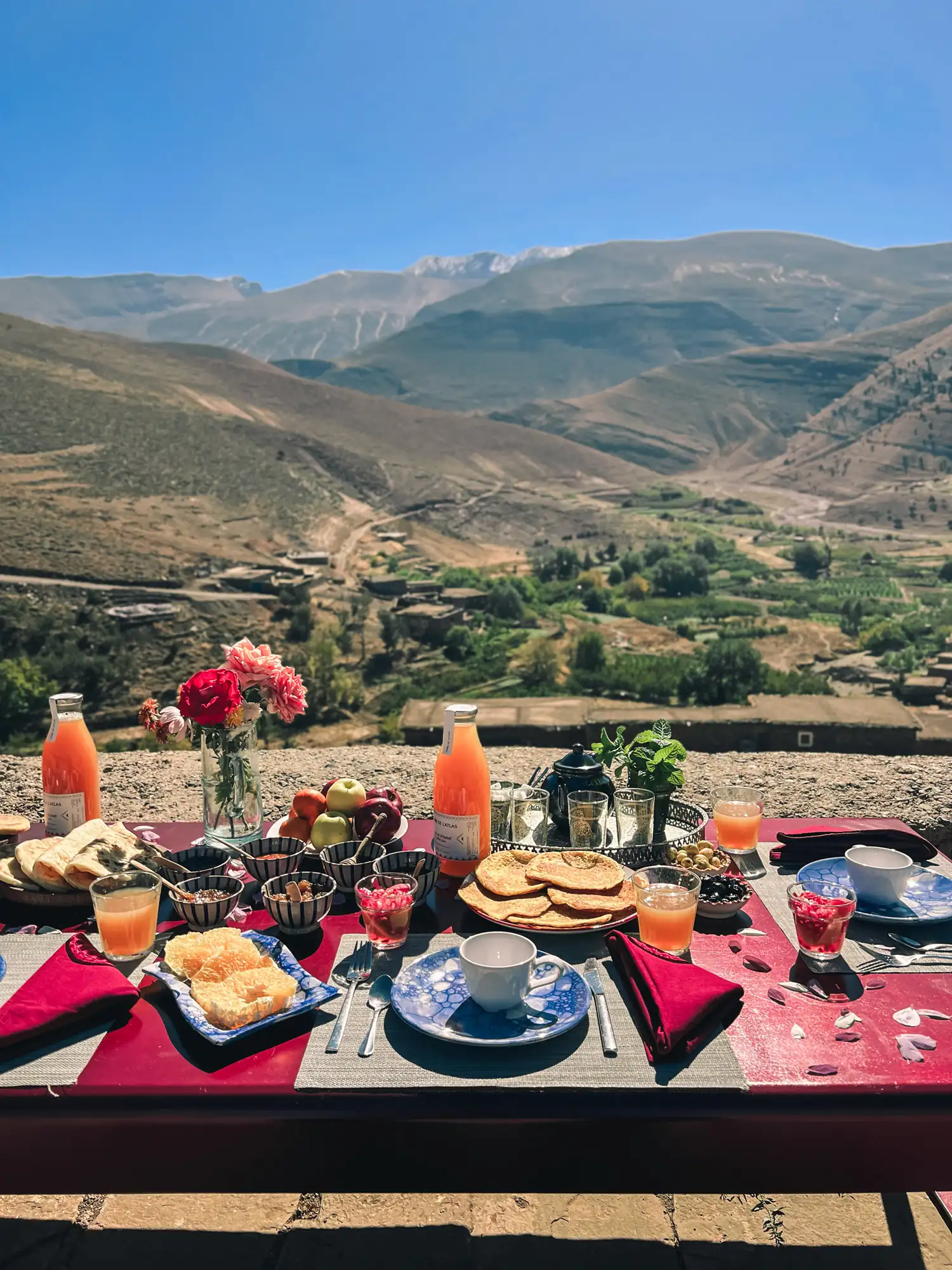
Imagine breakfast at Touda.
Bread.
Butter.
A tea.
And a jar of jam.
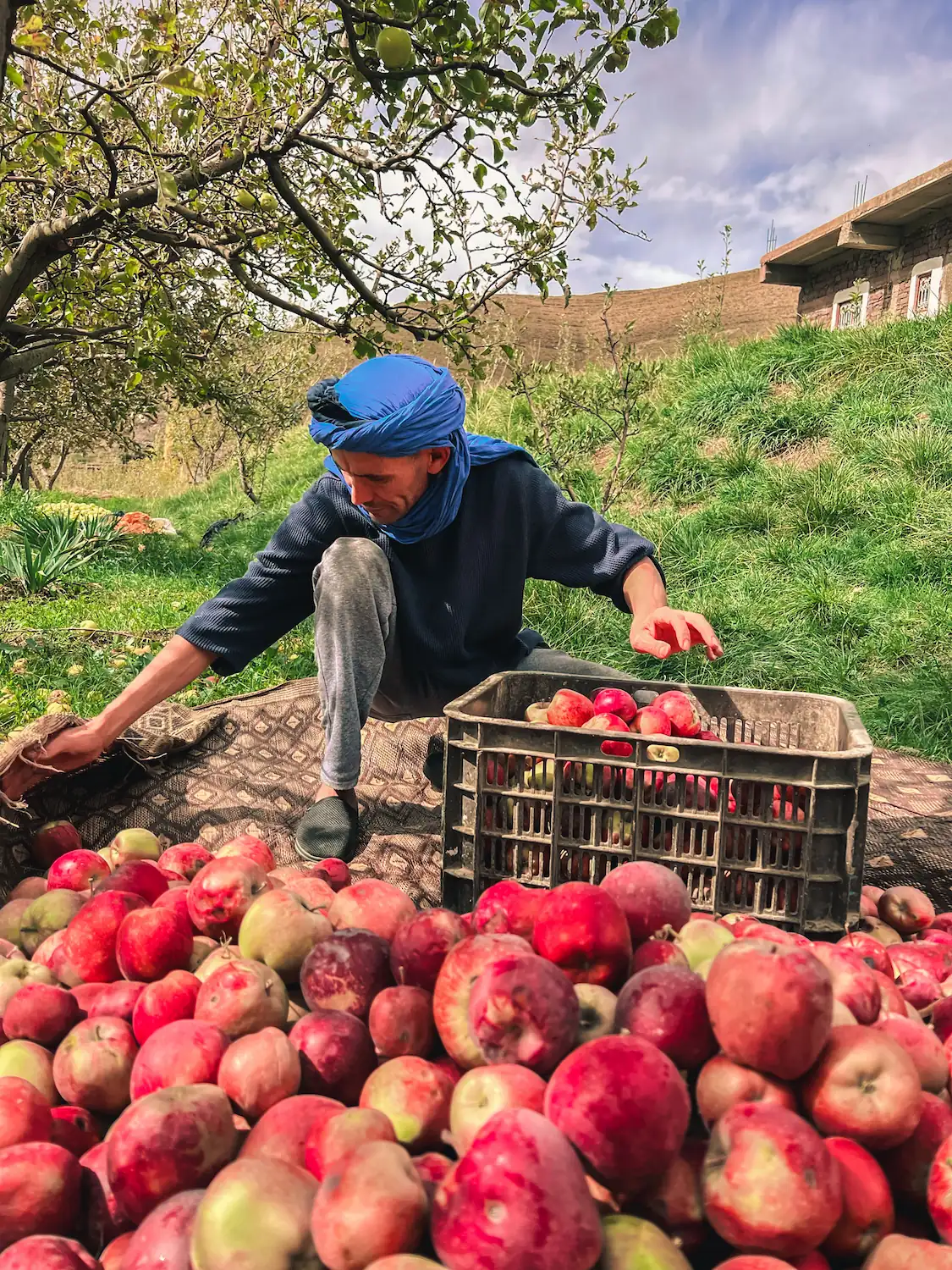
But behind that jar there is an orchard, a producer, a harvest, a recipe and a craft.
That is the whole idea behind Terre de l’Atlas.
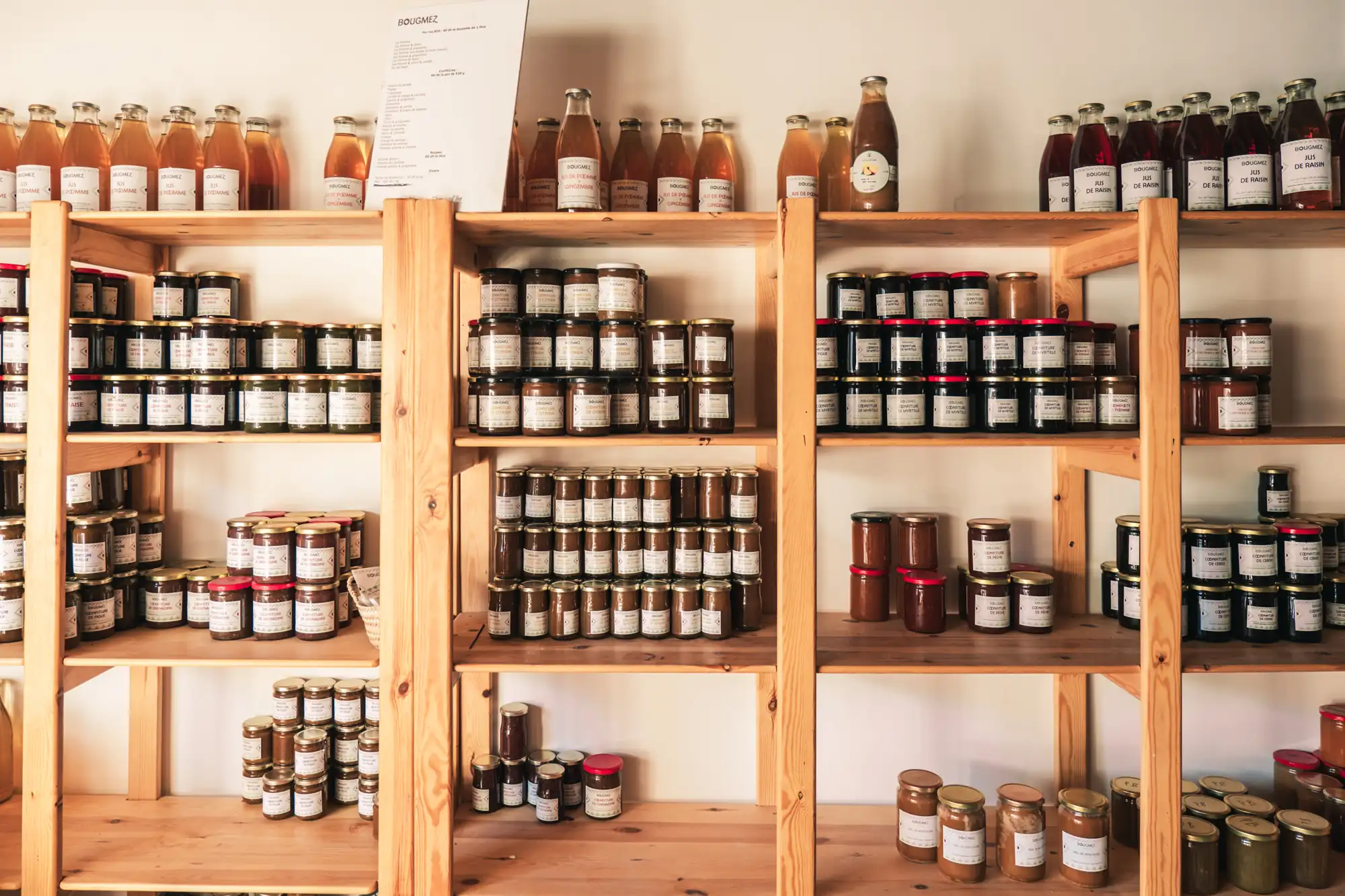
Based in Zawyat Oulmzi, within the Bogmaz Cooperative, the organisation turns local produce into juices, jams, compotes, vinegars, fruit in syrup and jarred vegetables.
Recipes that reveal another side of the High Atlas: the one you can taste.
The products are made by hand, with no preservatives in the juices featured on the website, and the different productions help showcase the region’s agricultural diversity.
Behind the products, women and men
This may be what makes Terre de l’Atlas particularly interesting.
Because a local produce brand can easily become just a matter of packaging and marketing.
Here, the stated goal is different: to keep a local economy alive by showcasing what already grows in the valley and the know-how of the women and men who work there.
Nejma, for example, is at the heart of production. She helps process the products while also being a cook at Touda.
Ahmed is at once a shepherd, a farmer and a guide.
Youssef is a farmer and mountain guide, and supplies, among other things, organically grown apples.
Zakaria represents a new generation attached to its homeland.
And Saïd started the project, with the idea of strengthening the links between farming, the region and the solidarity economy.
Everything then becomes clearer.
The product is not separate from the land.
It is an expression of it.
What if travel could also be useful?
One question remains, though.
What happens when the travellers leave?
The valley goes on living.
The children keep going to school.
Families keep working.
Social and economic difficulties do not disappear because a traveller spent a few nights in a beautiful ecolodge.
This is where L’Arbre du Voyageur comes in.
Created by Touda Ecolodge, the association aims to promote responsible tourism in the High Atlas, and more specifically in the Aït Bougmez valley. It seeks to support tourism practices that respect the environment and the people, and that contribute to the social, cultural and economic development of the region.
The idea matters:
not just talking about responsible tourism, but trying to make it a concrete reality.
Education, health and the future
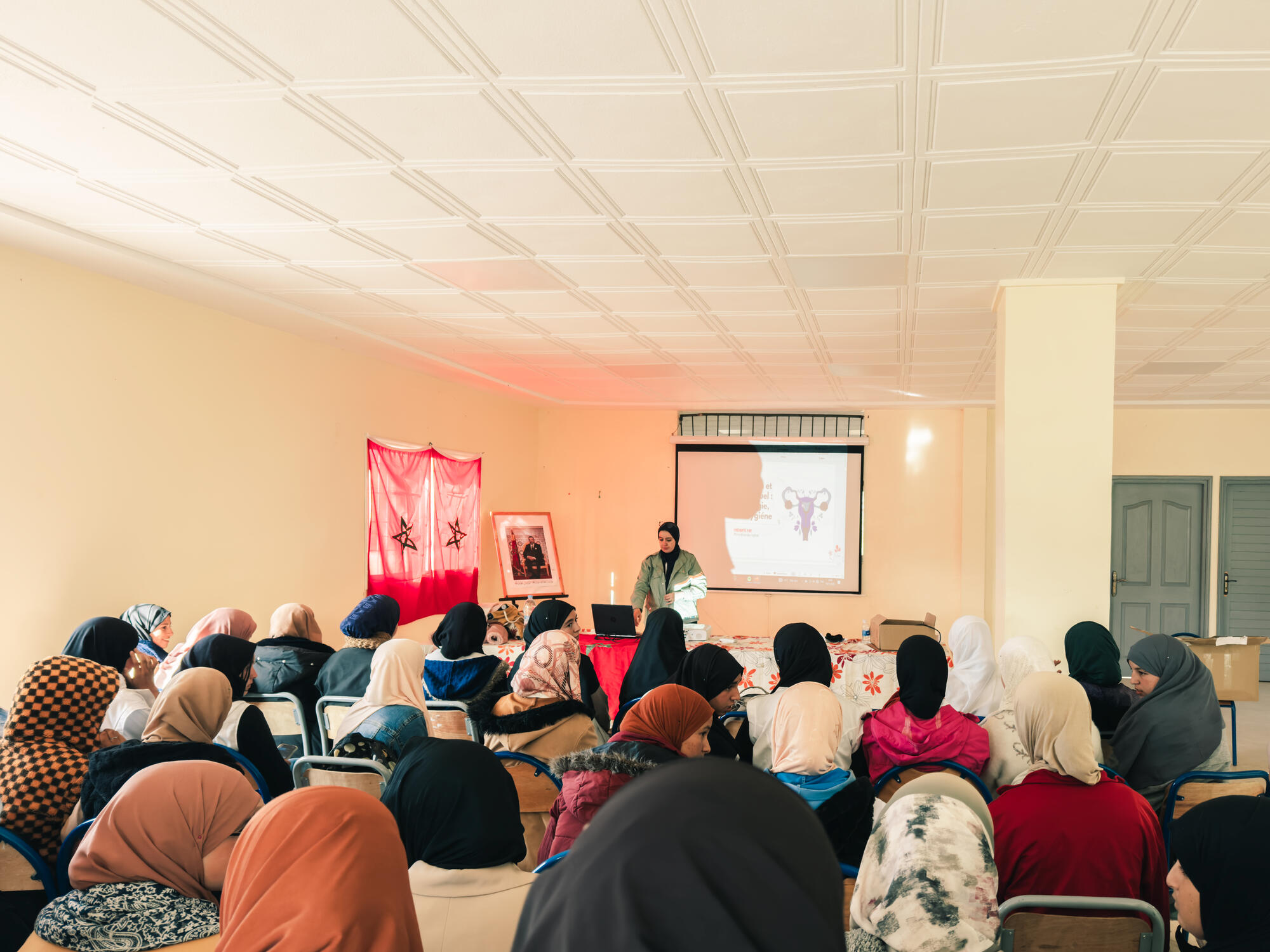
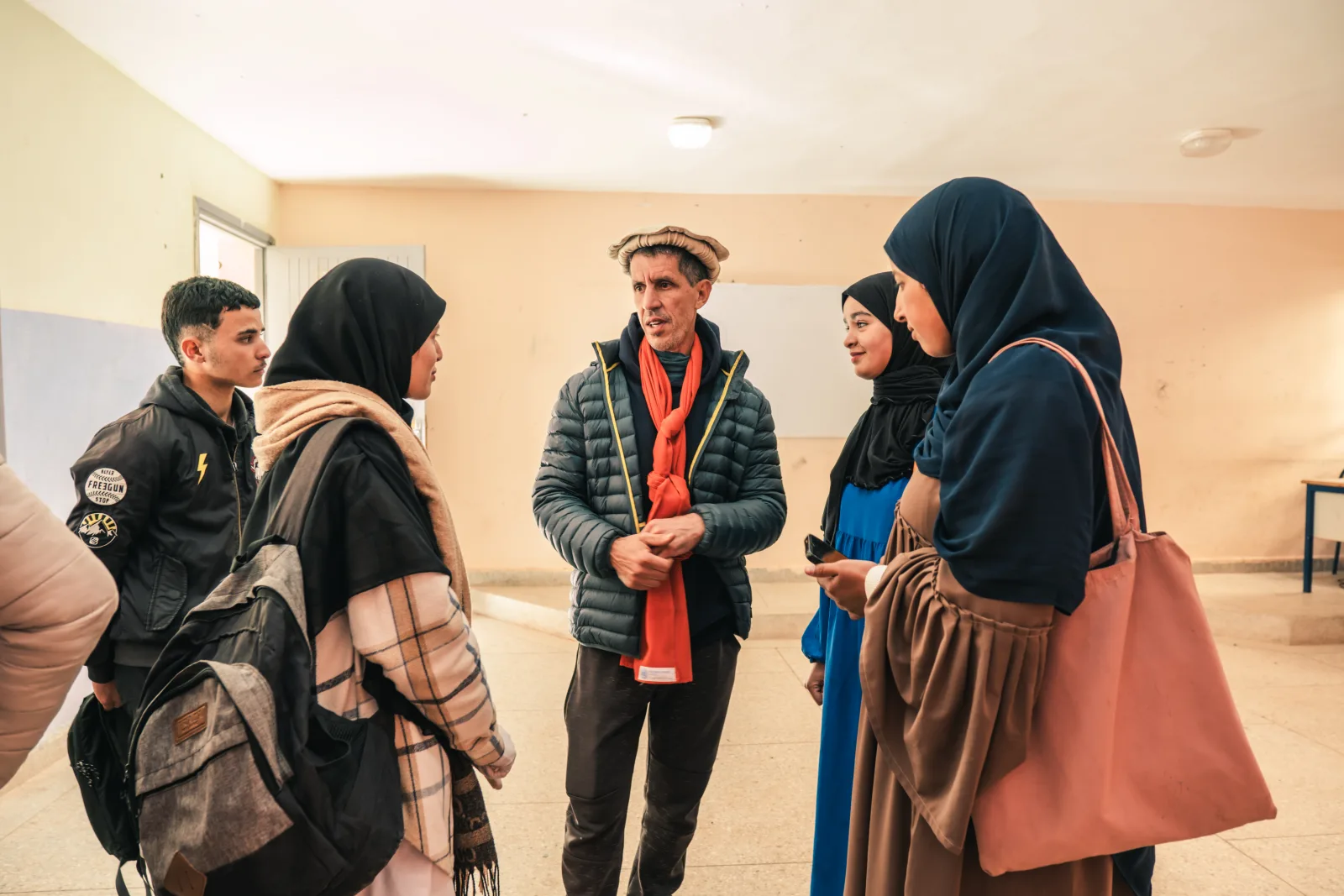
L’Arbre du Voyageur runs projects focused in particular on education, health and local development.
The association seeks to support rural communities and to give people, especially young people, more opportunities to build their future.
It is another way of seeing the traveller’s role.
Travellers do not simply come to “consume” a destination.
They can also contribute to its development.
Not necessarily by doing great things.
Sometimes it simply starts with choosing a local business, staying several nights in a valley rather than rushing through it, hiring a local guide, buying a locally made product or taking an interest in the lives of the people who live here all year round.
Travel then becomes a relationship.
One team, one root
This is where Touda’s story becomes particularly interesting.
Because it would be easy to present Touda, Terre de l’Atlas and L’Arbre du Voyageur as three independent projects.
That would miss the point.
They are bound by the same team, the same story and above all the same philosophy.
Touda welcomes travellers.
Terre de l’Atlas showcases the region’s resources.
L’Arbre du Voyageur supports projects that aim to strengthen local life.
Three ways of working with the same valley.
Three ways of creating value without separating economic activity from social and environmental reality.
A loop rather than a model
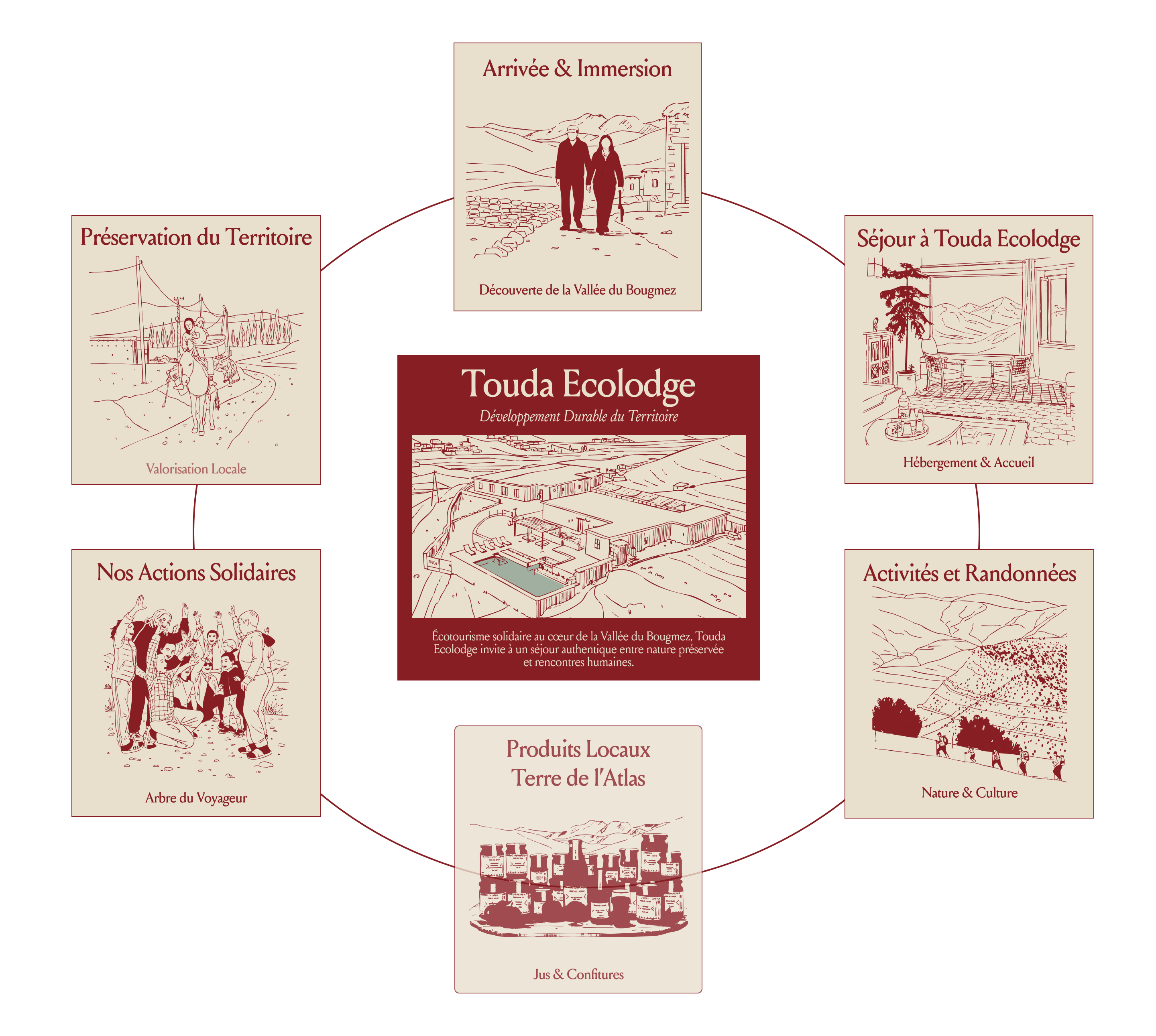
You could almost picture this adventure as a loop.
The mountain produces.
The farmers grow.
Terre de l’Atlas processes.
Touda cooks and welcomes.
The guides reveal the trails.
Travellers meet the local people.
Part of this activity creates local income.
L’Arbre du Voyageur supports initiatives for the region.
And the region, in turn, keeps nourishing the experience offered to travellers.
Everything is connected.
It is this interdependence that gives the project its meaning.
A story that continues
The adventure that began with Touda is therefore not over.
It continues through Terre de l’Atlas.
It continues with L’Arbre du Voyageur.
It continues with the producers, the guides, the craftsmen, the cooks, the farmers and the young people of the valley.
And it continues every time a traveller chooses to take the time to discover the High Atlas differently.
Because, at heart, the question may not only be:
“Where will I travel?”
But rather:
“What mark does my journey leave behind?”
In the Aït Bougmez valley, a team has chosen to try to answer that question for nearly twenty years.
By welcoming.
By sharing.
By producing.
By passing on.
And by building, little by little, a different idea of travel.
An idea in which the beauty of a place is measured not only by what you can see there, but also by what you can help keep alive.